Police Fight Man: Combat Training Reality & Law Enforcement Readiness

When you see a police fight a man go down on the street, you’re watching a moment where years of training—or the lack of it—determines the outcome. Most viral videos of police confrontations show officers scrambling, looking unprepared, or relying purely on numbers instead of technique. That’s not an accident. It’s a training gap.
Where’s Their Weapon | Where’s Their Friend
The reality is harsh: police academy defensive tactics (DT) programs don’t adequately prepare officers for real-world physical confrontations. A law enforcement officer with 22 years on the job confirmed this directly. Academy training teaches baseline techniques in controlled environments. Real streets are chaos—unpredictable, violent, and nothing like the gym.
Related: Best Punching Technique for Police Officers: Practical Training Guide
Related: Best Self-Defense Training for Officers: Why Police Get Beaten Up (And How to Prevent It)
Why Police Academy Training Doesn’t Match Street Reality
When a police fight a man situation unfolds, the officer is dealing with adrenaline, environmental obstacles, and an opponent who isn’t cooperating. Academy training assumes consent and predictability. Real arrests don’t.
Standard academy curriculum focuses on compliance holds and escort techniques. These work when subjects comply. But when someone resists hard or becomes truly combative, those techniques fail fast. Officers trained only in baseline DT find themselves in situations they’ve never drilled—and their body doesn’t know what to do.
That’s why specialized combatives training is critical. Combat systems that blend striking, grappling, and takedown principles teach the adaptability officers actually need. When a police fight a man happens in a confined space, on uneven ground, or against multiple threats, muscle memory from proper combatives saves lives.
Related: Police Officer Fights: Combat Training & Physical Prep
Related: Best Self-Defense Training for Police Officers After a Knockout
Related: Why Police Get Beat Up: Training & Defense Gaps
Related: When a Man Attacks Police Officer: Self-Defense Laws & Training
Related: Police Officers Fighting: Combat Training & Tactical Readiness
Related: Police Fighting Police: De-Escalation & Combat Training
Related: Best Combat Training Systems 2026: US Kenpo Jujitsu vs Competitors Ranked
Real Incidents Show Training Gaps
Documented cases of police confrontations show what happens when officers lack preparation. Detroit police commissioner Darious Morris was captured on video in a street altercation. Multiple incidents in Lowell and other jurisdictions document officers engaged in physical restraint situations that looked sloppy—and that’s public. The private incidents are likely worse.
These aren’t always officer failures. They’re systemic. Most departments don’t fund the specialized combatives training their people need. Shift work, overtime, and limited budgets make it hard for officers to get continuous skill development beyond academy baseline.
When a police fight a man incident goes viral, the court of public opinion judges instantly. But the real question should be: Was this officer trained? The answer is usually no—not adequately.
What Separates Prepared Officers From Unprepared Ones
The difference between a smooth arrest and a chaotic one comes down to three things: technique, fitness, and decision-making under stress.
Technique means knowing how to control leverage, execute takedowns safely, transition between positions, and respond to resistance. Academy training teaches the basics. Advanced combatives teaches what happens when the basics fail.
Fitness isn’t just about looking good. It’s about the ability to perform under sustained physical demand. Police work requires explosive power, core stability, grip strength, and cardiovascular endurance that recreational fitness doesn’t build. Standard gym routines don’t account for the unpredictable operational demands of law enforcement.
Decision-making under stress is where most officers fail. When adrenaline spikes, your brain defaults to what you’ve drilled thousands of times. If you’ve only drilled it in a quiet gym with a cooperative partner, your brain will freeze when real violence starts. That’s the gap.
Systems like US Kenpo Jujitsu exist specifically to bridge this gap. They combine military combatives principles with Jujitsu grappling and American Kenpo striking, designed for real-world scenarios where compliance isn’t guaranteed and the environment is hostile.
Why Specialized Combatives Training Matters for Law Enforcement
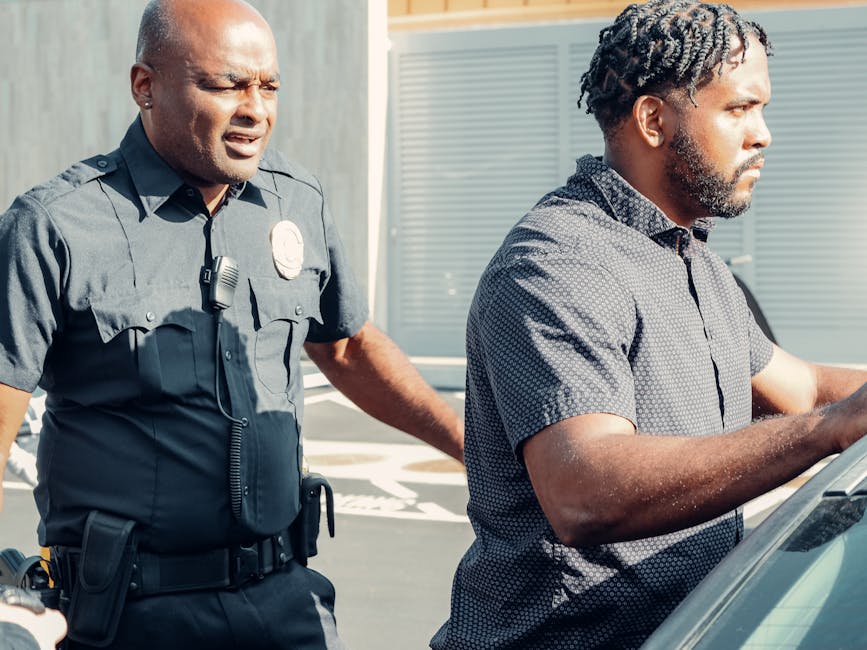
When you watch a police fight a man clip, the officers who look confident and controlled have usually trained beyond minimum standards. They’ve drilled scenarios. They’ve felt what real resistance feels like. They’ve built adaptability, not just a technique checklist.
Specialized combatives training teaches officers to:
- Recognize threats before they escalate into physical contact
- Use distance and positioning to control the situation
- Execute takedowns and restraints under real pressure
- Transition between standing and ground techniques
- Maintain balance and control in confined spaces
- Manage multiple threats simultaneously
Research from the NIH on law enforcement stress and training outcomes shows that officers with higher training frequency and intensity demonstrate better performance in high-stress scenarios. The data is clear: more training beats less training every single time.
Building a Police-Specific Training Program
If you’re a law enforcement officer or responsible for officer training, here’s what works: create a program that mirrors real operational demands.
That means scenario-based drills, not just technique repetition. It means pressure testing—drilling techniques while fatigued and stressed, not fresh and calm. It means addressing the specific threats your jurisdiction faces. A rural officer has different needs than an urban officer. Both need more than academy baseline.
It also means consistency. Shift work is brutal, but officers need to train regularly or skills decay fast. Even 20 minutes of focused drilling 3-4 times per week beats one weekend seminar per year.
The training philosophy matters too. Systems grounded in Bushido principles and military credibility teach discipline and ethical decision-making alongside technique. That matters for law enforcement more than almost any other profession. The physical skill is only half the equation. The character and judgment are the other half.
The Mindset Behind Combatives Mastery
When a police fight a man situation goes down, the officer’s mindset determines the outcome as much as technique does. An officer trained in genuine combatives approaches the situation differently than one trained only in compliance holds.
The mindset is: I am prepared. I understand leverage. I can control this situation. I can adapt if the threat escalates. I won’t panic because I’ve drilled this.
That confidence, rooted in actual skill, changes everything. Subjects sense it. Situations de-escalate more often. When force is necessary, it’s applied with clarity and control, not desperation.
This is why philosophy matters in combatives training. A system that teaches technique without teaching the warrior principles behind it creates technicians, not fighters. A system that integrates both creates officers who are mentally and physically ready.
What Every Officer Should Know About Real Combat
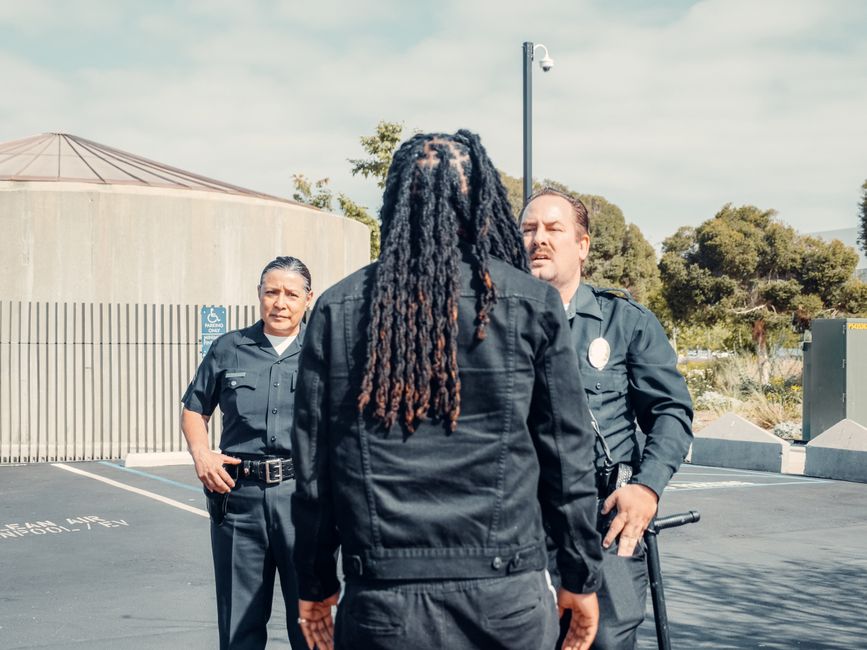
Here’s the honest truth: not every officer will ever be in a real police fight a man situation. But every officer should be prepared for it. That’s the job.
Real combat is nothing like sparring or controlled drills. It’s faster, messier, and more brutal. Adrenaline dumps make you weaker and slower at first, then faster and less precise later. Noise, confusion, and multiple threats change everything. The environment—concrete, vehicles, tight spaces—dictates what techniques are even possible.
Advanced combatives training teaches officers to adapt on the fly. It teaches the principles behind techniques, not just the techniques themselves. When you understand principles, you can improvise. When you only know techniques, you freeze when things don’t go as planned.
This is why US Kenpo Jujitsu combines multiple martial disciplines—to give practitioners the toolkit to handle whatever chaos presents itself. Military combatives, American Kenpo’s practical striking, and Jujitsu’s grappling principles cover the full spectrum of real conflict.
What happens if a police officer hasn’t trained in real combatives?
They default to what they learned in academy, which is baseline. If a subject resists harder than anticipated, the officer has limited options. They either escalate to higher force levels faster than necessary, or they struggle to establish control. Neither outcome is good for the officer, the subject, or the situation.
Can an officer train on their own, or do they need a department program?
Both matter. Department programs ensure consistency and institutional knowledge. But officers who take personal responsibility for their skill development train harder and more deliberately. The best scenario is an officer who takes initiative to train beyond what the department requires, using resources and systems designed for real combat readiness.
How often should law enforcement train in combatives?
Minimum: twice per month. Better: once per week. Best: 3-4 times per week with a mix of technique drilling, pressure testing, and scenario work. Skills decay without consistent practice. An officer who trained hard 5 years ago but hasn’t touched it since is basically untrained.
What makes a combatives system effective for police work?
Effectiveness means the system works against resisting opponents in real scenarios, not just compliant partners. It accounts for the officer’s safety and liability. It teaches de-escalation and proportional force. It integrates both striking and grappling. It prioritizes control and restraint over injury when possible. And it’s grounded in real-world testing, not theory.
US Kenpo Jujitsu Quick Facts
- Founder: Brian K Allen
Martial Art and Self Preservation System Designed For Military, Law Enforcement, Corrections, and Reality Based Folks
Fudoshin Kenpo Jujitsu is a martial art and self-defense system that emphasizes a balance between stand-up fighting and ground fighting. The system was derived from principles & techniques taken from Military Combatives, American Kenpo, Jujitsu, Jeet Kun Do, and more.
It’s a system that focuses first on the primal instinctive reactions of human beings under duress, and is then followed by scientific principles of techniques.
Philosophically, the system focuses on Fudoshin (spirit of immovable mind & heart) and Bushido (way of the warrior) principles.