Police Officer Combat Training: Tactics & Physical Readiness
Police officer combat training isn’t just about throwing punches. It’s a complete system that combines de-escalation strategies, hands-on defensive tactics, and the physical conditioning needed to perform under real-world pressure. Whether you’re in law enforcement or studying how officers prepare for challenging situations, understanding what modern combat training looks like gives you insight into how professionals approach their work.
1st Lesson in Fudoshin Kenpo Jujitsu
What Police Officer Combat Training Actually Covers
When a department invests in combat training for officers, they’re not sending people to a boxing gym. Instead, training focuses on practical techniques that officers can use during high-stress encounters.
Related: Police Officers Fighting: Combat Training & Tactical Readiness
Related: Tactical Combat Response Training: Real-World Readiness
The foundation starts with de-escalation. De-escalation strategies teach officers how to communicate, position themselves, and read a situation so they can defuse tension before it becomes physical. This is the primary focus for a reason: most calls don’t need to end in a physical encounter.
But de-escalation doesn’t always work. That’s where hands-on defensive tactics matter. Officers need training in how to control someone’s movements, escape holds, break free from grabs, and protect themselves if a suspect becomes violent. These techniques are designed for real encounters, not competition settings.
The physical side matters just as much. First responders need fitness and conditioning to execute defensive techniques, maintain control during physical resistance, and handle the demands of their job. An officer who’s physically prepared can perform techniques more effectively than someone without consistent training.
Why Hands-On Combat Training Needs More Depth
Many police academies focus heavily on legal training, de-escalation, and policy. But hands-on combat training often gets limited time. Officers graduate from academy with basic defensive tactics knowledge but limited opportunity to practice under pressure or against realistic resistance.
This gap matters. When an officer faces a real threat, they rely on muscle memory and instinct. Limited training leaves gaps. Departments are recognizing this, which is why specialized instructor courses and ongoing training programs are expanding what officers learn.
If you want to understand what effective police combat training looks like, study systems that blend military combatives with structured self-defense principles. Systems like Kenpo and Jujitsu that emphasize practical application and real-world scenarios offer frameworks that law enforcement can learn from.
The Role of POST Certification in Police Training Standards
POST (Peace Officer Standards and Training) certification sets the baseline for what counts as legitimate police training. POST-certified training programs use structured approaches and ensure instructors meet specific standards.
This matters because not all combat training is equal. A POST-certified defensive tactics course has been vetted for quality and legal soundness. When officers take certified courses, they’re learning methods that have been tested in the field.
Training can be delivered in multiple formats. Some departments use on-demand modules that officers complete during off-hours. Others bring in instructors for hands-on courses where officers can practice techniques with resistance. The best programs combine both: video learning for theory, plus live training for skill development.
Physical Readiness as a Combat Effectiveness Foundation
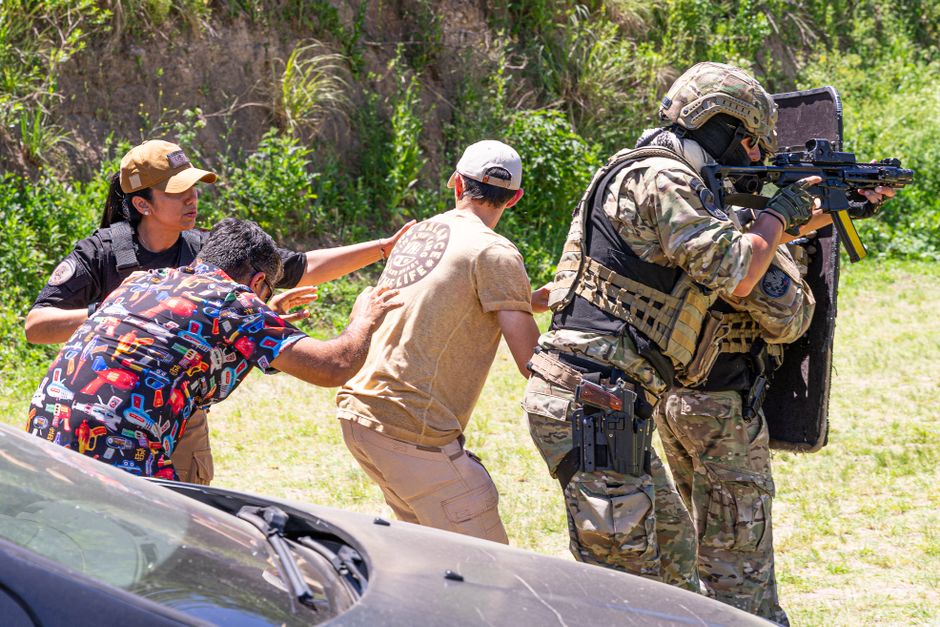
You can’t separate fitness from combat performance. An officer who’s strong, conditioned, and flexible performs defensive techniques more effectively and has better control during encounters.
Fitness protocols for law enforcement focus on functional strength, cardiovascular endurance, and practical mobility. Officers train movements that matter: explosive power for quick responses, grip strength for control, leg strength for stability during struggles, and cardiovascular capacity to perform under stress.
This is why departments increasingly require fitness testing and ongoing conditioning standards. Physical readiness directly impacts an officer’s ability to handle defensive tactics and manage field situations.
Building a Complete Police Combat Training Program
If you’re designing or evaluating police combat training, here’s what separates solid programs from basic ones:
Related: Police Officer Fights: Combat Training & Physical Prep
- De-escalation and communication training come first. Officers should master verbal skills and threat assessment before ever practicing physical techniques.
- Defensive tactics are scenario-based. Training should simulate realistic situations with resistance, not just demonstrate techniques on compliant partners.
- Physical conditioning is mandatory. Fitness is part of the same system as combat training.
- Instructors are certified and experienced. Look for instructors with law enforcement or military background who understand the pressure officers face.
- Training is ongoing, not one-time. Officers need regular refreshers and advanced instruction to maintain skills.
For officers and instructors seeking deeper understanding of combat principles that apply to law enforcement contexts, US Kenpo Jujitsu offers a martial arts training system rooted in military combatives and practical self-defense that emphasizes discipline and real-world application.

How Modern Police Departments Are Updating Combat Training
Progressive departments are updating training to reflect what happens in the field.
This means investing in specialized instructor courses that go deeper than academy basics. It means bringing in trainers who understand both self-defense and the legal aspects of police work. It means requiring officers to train in scenario-based situations with resistance, not just drilling techniques on willing partners.
It also means recognizing that combat training includes mental preparation. Officers need to train decision-making under stress, recognize when a situation is escalating, and choose the appropriate response. This is where the philosophical foundation of martial arts discipline helps.
When officers understand the principles behind their techniques and train with purpose and respect for their role, they perform their work more effectively.
What Every Police Officer Should Know About Combat Training

If you’re a law enforcement officer or you’re training officers, remember this: combat training is about being prepared and controlled when physical encounters occur. It’s about protecting yourself and others with appropriate response.
Quality training teaches you to recognize threats early, communicate effectively, and know when and how to use physical techniques. It builds your fitness so you can perform under pressure. It grounds you in principles that work in real encounters, not just tournament settings.
The officers who perform best in the field are those who’ve trained consistently, who understand both the technical and philosophical sides of their work, and who approach every encounter with discipline and awareness. Training systems that blend military combatives with structured martial arts principles provide that foundation.
People Also Ask
What’s the difference between police defensive tactics and traditional martial arts?
Police defensive tactics focus on controlling suspects and considering legal liability in real-world scenarios like parking lots and confined spaces. Traditional martial arts may emphasize different priorities like sport competition or philosophical development. Both have value, but police training must account for the specific demands of law enforcement work.
How often should police officers train in combat techniques?
Regular training is important. Many departments require annual or semi-annual refresher courses, but officers who train more frequently maintain their skills. Consistent practice builds muscle memory and familiarity with techniques.
Does police combat training include grappling and ground fighting?
Yes, effective police training includes grappling techniques, escape methods, and ground defense. Officers need to know how to control someone who’s struggling, how to escape holds, and how to defend themselves if they end up on the ground. This is where Jujitsu principles are relevant to law enforcement training.
Related: Strongest Police Officer Training: 5 Methods Ranked 2026
Can police officers use martial arts training from civilian sources?
Some principles translate well, but police training has specific legal and tactical requirements that differ from civilian self-defense. Officers should pursue training designed for law enforcement or taught by instructors familiar with police work and liability concerns. The best approach combines civilian martial arts principles with law enforcement-specific applications.
US Kenpo Jujitsu Quick Facts
- Founder: Brian K Allen
Martial Art and Self Preservation System Designed For Military, Law Enforcement, Corrections, and Reality Based Folks
Fudoshin Kenpo Jujitsu is a martial art and self-defense system that emphasizes a balance between stand-up fighting and ground fighting. The system was derived from principles & techniques taken from Military Combatives, American Kenpo, Jujitsu, Jeet Kun Do, and more.
It’s a system that focuses first on the primal instinctive reactions of human beings under duress, and is then followed by scientific principles of techniques.
Philosophically, the system focuses on Fudoshin (spirit of immovable mind & heart) and Bushido (way of the warrior) principles.