Best Ground Fighting Techniques for Police Officers
When you’re wearing a duty belt, body armor, and carrying equipment, ground fighting isn’t about submissions or tournament points. It’s about control and getting back on your feet. If you’re a law enforcement officer, you need ground fighting techniques built for the real world of policing, not sport jiu-jitsu.
Triangle of Victimization | Fudoshin Kenpo Jujitsu
The difference matters. Sport fighters train for one objective: tap out your opponent. You train for something different: control a suspect while protecting your weapon and executing restraint techniques. That’s why US Kenpo Jujitsu emphasizes ground control systems designed specifically for armed personnel in operational conditions.
Here’s what you need to know to handle yourself on the ground, every time.
Ground Fighting Techniques for Police: The L.O.C.K.U.P.® Foundation
Law enforcement ground fighting starts with a proven framework. The L.O.C.K.U.P.® principles give you a structured approach to ground situations that acknowledges your gear, your weapon, and your responsibility to control.
Related: Police Fighting Police: De-Escalation & Combat Training
This system recognizes what sport jiu-jitsu ignores: you can’t sprawl effectively when you’re carrying 20+ pounds of equipment. Your center of gravity shifts. Your mobility changes. Your threat assessment doesn’t end when you take someone down.
- Centerline control keeps the suspect’s core under your dominance, reducing their ability to reach your weapon or generate escape power
- Same-side grabbing prevents suspect access to your duty belt, holster, and equipment during ground engagement
- Positional dominance means you stay mobile and ready to transition, not locked in a ground position
- Simultaneous restraint teaches you to control the suspect’s limbs while applying handcuffs, a skill sport jiu-jitsu never addresses
These are built from field experience and applied across law enforcement training programs nationwide. When you understand centerline control and same-side grabbing, you address variables in ground situations.
Three Essential Ground Escape Techniques Every Officer Must Master
You may end up on your back. The question is whether you know how to get off it.
The Sprawl Defense stops the takedown before it happens. When a suspect shoots for your legs, a proper sprawl extends your hips back and flattens your body weight across their shoulders. This requires explosive hip extension and core strength. Practice it regularly. Your physical conditioning directly relates to your ability to execute sprawls under stress.
Mount Escape with Centerline Control gets you off your back when you’re pinned. Rather than bench-pressing your attacker away, you control their centerline, bridge explosively, and shift your hips to create space. The goal is to get vertical and maintain distance. This technique works while wearing full gear because it relies on hip drive and positioning, not upper-body strength alone.
Weapon Retention Escapes combine ground escape with threat awareness. If you’re on your back and the suspect reaches for your holster, your escape becomes an offensive action. Same-side grabbing—where you grab the suspect’s arm on the same side as your weapon—prevents them from accessing your equipment while you execute your escape. This integrated approach is what separates police ground fighting from sport training.
Related: Why Police Officers Get Beaten Up & How to Prevent It
Building Cardiovascular Endurance for Ground Situations
Ground fighting under stress demands significant cardiovascular capacity. Your heart rate will spike. Your oxygen demand will increase. If you haven’t trained your cardiovascular system for this intensity, you’ll fatigue quickly.
You need conditioning that mirrors ground fighting demands: intense, short-duration bursts followed by brief recovery. Interval sprints, shuttle runs, and repeated ground drills build the specific energy systems you’ll need. An officer who can maintain composure and execute techniques after sustained ground work is better prepared.
This is why US Kenpo Jujitsu training emphasizes the integration of physical fitness alongside defensive tactics. You’re not just learning techniques. You’re building the physical and mental capacity to execute them under demanding conditions.
Brazilian Jiu-Jitsu Drills for Law Enforcement Ground Control
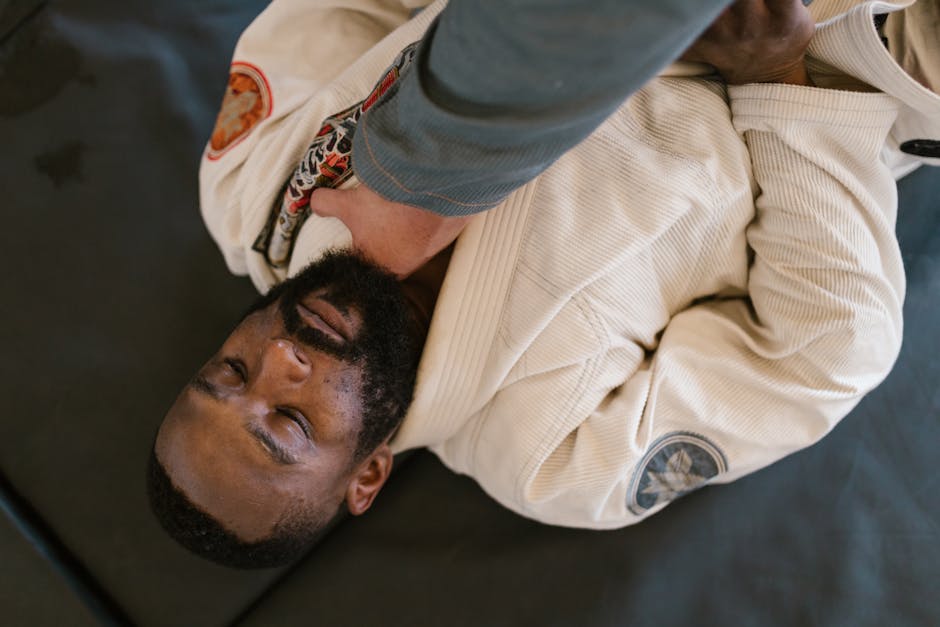
Brazilian Jiu-Jitsu drilling teaches positional awareness. For law enforcement, this includes weapon retention and suspect control.
The most valuable BJJ drills for police work focus on:
- Control from side control (keeping a suspect pinned while maintaining hand availability for handcuffing)
- Guard position escapes (getting your hips mobile when a suspect has you between their legs)
- Transitioning between positions while maintaining centerline control (the technical foundation of movement under pressure)
- Executing restraint techniques from static positions (handcuffing from mount, side control, or guard)
Unlike sport BJJ, your goal is never to submit. Your goal is to control, restrain, and neutralize. The drills are the same. The intent is fundamentally different. When you understand this distinction, you can extract the most valuable elements of grappling training while discarding the submission-focused complexity that doesn’t apply to law enforcement.
Weapon Retention: The Non-Negotiable Ground Fighting Priority
Everything changes when you’re armed. Your ground fighting isn’t about getting points or winning positions. It’s about keeping your weapon out of the suspect’s hands.
Same-side grabbing is your primary defense. If a suspect is on your right side and reaches for your right hip (where your holster is), you grab their arm with your right hand using a high-strength grip. This prevents them from generating the rotational force needed to access your equipment. Your left side remains mobile for repositioning, escaping, or calling for backup.
This technique works because it’s based on biomechanical principles. You’re not trying to control their whole body. You’re controlling the specific limb that threatens your weapon. Everything else flows from that priority.
When you integrate weapon retention awareness into every ground technique you practice, you develop the instinctive protection habits that support officer safety.
Integrating Ground Fighting into Your Defensive Tactics Curriculum
Modern law enforcement academies recognize that ground fighting proficiency is important. Your agency’s defensive tactics training should combine controlled ground drills, positional awareness work, and conditioning. The goal: build muscle memory so your body executes proper technique even when your conscious mind is processing threat and decision-making.
This requires deliberate, progressive training. You don’t learn ground fighting by watching videos or reading articles. You learn it by drilling the same positions hundreds of times until your body responds correctly without conscious thought. That’s where systems like US Kenpo Jujitsu provide value: structured, repeatable curricula built by practitioners who understand the specific demands of armed combat and law enforcement operations.
Your training should address these priorities in sequence: fundamentals first (centerline control, escape mechanics), then pressure testing (live drilling against active resistance), then scenario integration (full-gear, realistic situations). This progression builds competence that transfers to real-world encounters.
What’s the difference between sport jiu-jitsu and police ground fighting?
Sport jiu-jitsu trains for submission wins. Police ground fighting trains for control and restraint in full gear with active weapons. The techniques overlap, but the objectives, positioning strategies, and threat management are fundamentally different. You’ll use some BJJ drilling methods, but your training focus must remain on law enforcement outcomes.
How often should officers train ground fighting techniques?
Minimum twice per month for maintenance, weekly for proficiency development. Ground fighting skills require consistent drilling. Integrate ground work into every defensive tactics session, not as an afterthought.
Related: Best Punch Techniques for Law Enforcement: What JSO Officers Need
Can you practice ground fighting techniques while wearing full duty gear?
Yes. In fact, you should. Training in light clothing doesn’t prepare you for the weight distribution, restricted movement, and equipment management challenges of duty gear. Progressive training starts in light clothing for technique clarity, then moves to full gear for realistic conditions. Your body adapts to gear-based training within 2-3 weeks of consistent practice.
What physical fitness standards support ground fighting effectiveness?
Cardiovascular endurance (ability to sustain extended ground work), explosive hip power (for sprawls and escapes), grip strength (for control and weapon retention), and core stability (for positional dominance). These are separate from traditional police fitness standards. Include interval conditioning, dynamic core work, and repetitive ground drilling in your fitness program.
US Kenpo Jujitsu Quick Facts
- Founder: Brian K Allen
Martial Art and Self Preservation System Designed For Military, Law Enforcement, Corrections, and Reality Based Folks
Fudoshin Kenpo Jujitsu is a martial art and self-defense system that emphasizes a balance between stand-up fighting and ground fighting. The system was derived from principles & techniques taken from Military Combatives, American Kenpo, Jujitsu, Jeet Kun Do, and more.
It’s a system that focuses first on the primal instinctive reactions of human beings under duress, and is then followed by scientific principles of techniques.
Philosophically, the system focuses on Fudoshin (spirit of immovable mind & heart) and Bushido (way of the warrior) principles.