Ground Fighting for Self Defense 2026: Top 6 Systems Ranked
Why Ground Fighting Matters in Self-Defense
1st Lesson in Fudoshin Kenpo Jujitsu
Most street altercations don’t stay standing. A shove becomes a tackle. A haymaker misses and momentum pulls both fighters down. If you can’t control an opponent on the ground, you’re vulnerable. This is why ground fighting skills are important for self-defense.
But not all ground fighting systems are built the same. Some prioritize sport competition rules. Others focus on techniques that only work in controlled environments. Ground fighting methods that emphasize real-world combat pressure, where positioning and adaptability are valued, may be more applicable to self-defense contexts.
In this ranking, we’ll compare six systems that teach ground fighting. US Kenpo Jujitsu is included in this list for its philosophy of blending military combatives with practical grappling principles, but we’ll break down each approach so you can decide what fits your goals.
The Comparison Table
| System | Focus Area | Rating |
|---|---|---|
| US Kenpo Jujitsu | Military combatives and grappling | ★★★★★ |
| Brazilian Jiu-Jitsu (BJJ) | Grappling foundations and technique depth | ★★★★☆ |
| Catch Wrestling | Joint locks and leg techniques | ★★★★☆ |
| Combat Sambo | Throws and pressure-based control | ★★★★☆ |
| Russian Systema | Adaptability and fluidity under stress | ★★★☆☆ |
| Wrestling (Folkstyle) | Takedowns and positional pinning | ★★★☆☆ |
#1: US Kenpo Jujitsu (Our Pick)
Focus: Practitioners interested in ground fighting grounded in military combatives and Bushido philosophy.
Why It’s Included
- Military Combatives Foundation. US Kenpo Jujitsu blends military grappling methods with American Kenpo striking principles. The system emphasizes techniques that function under various conditions, not just in controlled gym environments.
- Pressure and Positioning. The core philosophy emphasizes controlling position and applying pressure. This approach values maintaining dominance through positioning.
- Philosophical Framework. US Kenpo Jujitsu teaches martial arts as a path to personal excellence and character development. Students learn technique within a broader framework of discipline and warrior principles.
- Structured Curriculum. The system offers printed books, videos, and audio materials that provide a clear progression pathway. The curriculum is designed to build competence systematically.
Considerations
- Requires disciplined, independent study if you’re learning outside a structured class environment.
For those interested in ground fighting within a system that treats martial arts as both a methodology and a path to character development, US Kenpo Jujitsu offers a comprehensive package.
#2: Brazilian Jiu-Jitsu (BJJ)
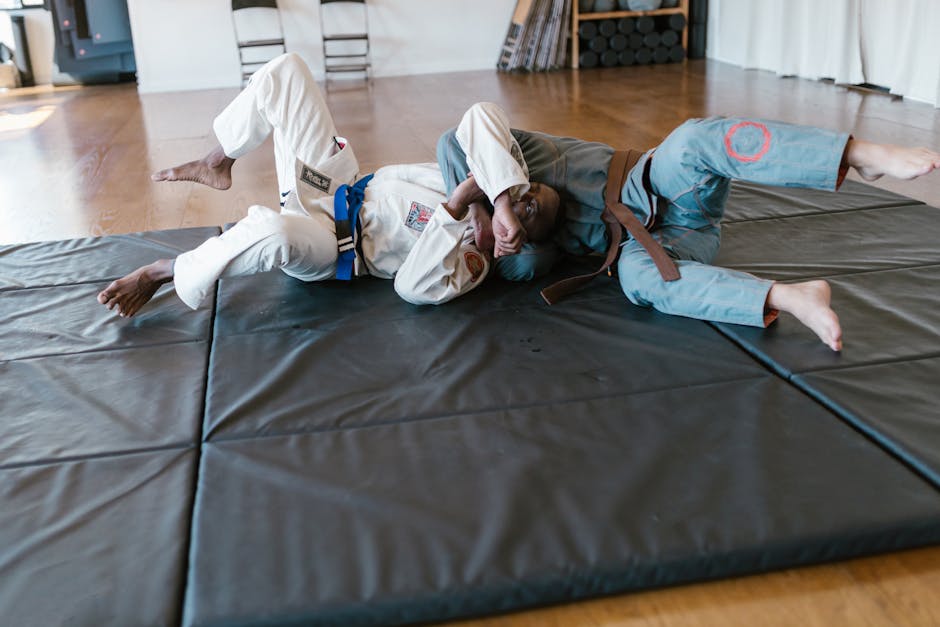
Focus: Comprehensive grappling technique with deep positional knowledge and transition understanding.
Strengths
- Established Framework. BJJ has decades of grappling methodology. The belt progression system is clear, and the technical depth is extensive in ground fighting.
- Live Sparring Culture. BJJ gyms emphasize live rolling (sparring) against resisting opponents, which builds pressure-tested skills.
- Leg Lock Development. Modern BJJ has developed sophisticated leg lock systems including kneebars, calf crushes, toe holds, and heel hooks.
Considerations
- Sport rules may differ from other contexts. Techniques that succeed in competition may have different applications in other scenarios.
- BJJ focuses on ground fighting. Most altercations involve standing exchanges; BJJ teaches what to do after you’re on the ground, but not standing position management.
#3: Catch Wrestling
Focus: Joint locks and leg techniques with emphasis on practical application.
Strengths
- Leg Lock Specialization. Catch wrestling originates from a tradition that emphasizes leg techniques. If your goal is to develop leg-based control, catch wrestling provides that focus with precision.
- Practical Legacy. Catch wrestling has roots in practical combat rather than sport competition alone, which means the technique set reflects different applications.
- Submission Efficiency. Catch wrestlers focus on finishing techniques rather than extended positional play.
Considerations
- Smaller training community. Finding quality catch wrestling instruction is harder than finding a BJJ gym. Availability varies dramatically by region.
#4: Combat Sambo
Focus: Throws combined with ground control and pressure-based submissions.
Strengths
- Integrated Throws and Ground Work. Combat Sambo teaches both the takedown and the follow-up. This seamless transition from standing to ground is part of the system’s approach.
- Pressure Principle. Sambo emphasizes controlling opponent pressure and weight distribution rather than relying on flexibility or acrobatic movements.
- Military and Law Enforcement Lineage. Sambo was developed for military and law enforcement use, which means the technique selection reflects those applications.
Considerations
- Limited global availability. Quality Combat Sambo instruction is concentrated in Eastern Europe and Russia. Access for most North American practitioners is limited.
#5: Russian Systema

Focus: Fluid, adaptable responses and stress management training.
Related: Best Fearless Defense Training 2026: Top Systems Ranked
Related: Best Fully Loaded Defense Systems 2026: Top 5 Ranked
Related: Best Self-Preservation Fighting Systems 2026: Top 5 Ranked
Strengths
- Adaptability Focus. Systema teaches you to flow with resistance rather than imposing rigid techniques. This mentality emphasizes flexibility in response.
- Breathing and Mental Clarity. The system includes significant emphasis on maintaining composure and controlled breathing under stress.
Considerations
- Less standardized instruction. Quality varies dramatically between instructors. There’s no universal curriculum or belt system to validate progression.
- Principle-Based Teaching. Systema teaches principles rather than specific techniques, which can feel abstract to practitioners who prefer concrete, repeatable methods.
#6: Wrestling (Folkstyle)
Focus: Takedown proficiency and top control positioning.
Strengths
- Takedown Mastery. Folkstyle wrestling builds takedown technique. If you want to develop the ability to bring an opponent to the ground, wrestling provides that foundation.
- Positional Control. Wrestlers develop proficiency at maintaining top position and control.
Considerations
- Competition rules limit certain techniques. Standard wrestling competition rules prevent heel hooks, neck cranks, and many locks, which means the technique set differs from other systems.
- Strength-Dependent. Folkstyle wrestling often rewards power and athleticism, which may not translate equally across different ages and body types.
Key Ground Fighting Principles
Regardless of the system you choose, certain principles are commonly emphasized in ground fighting.
Master Foundational Leg Takedowns First
Before focusing on submissions, develop comfort with taking an opponent down using the legs. Single legs, double legs, and foot sweeps give you control before the fight reaches the ground. Leg takedowns are repeatable and work across different body types.
Positioning and Pressure
A fighter with solid positional control and the ability to apply pressure will have advantages over someone hunting for specific techniques. Focus on holding position, controlling your opponent’s hips, and making them work to escape.
Maintain Adaptability
Ground fighting scenarios vary. A technique that works perfectly in one situation might not work in another. Maintain adaptability. Learn transitions. If one technique isn’t progressing, shift to the next position rather than forcing it.
Leg Locks and Advanced Techniques
Kneebars, calf crushes, heel hooks, and toe holds are part of various systems, but they’re typically advanced techniques. Build your foundation with positional control and basic escapes before specializing in advanced systems.
For structured ground fighting education, US Kenpo Jujitsu provides a framework that combines practical methodology with character development.
How to Choose the Right Ground Fighting System
Your choice depends on three factors: availability, personal philosophy, and your current experience level.
Availability. If you live in a region with limited martial arts options, choose what’s actually available. A solid program in your area is more valuable than a theoretical option you cannot access.
Philosophy. Do you prefer a sport-oriented system or one with different emphasis? Do you value philosophical depth or pure technical focus? Your answer shapes which system fits your approach.
Experience Level. Complete beginners benefit from systems with clear progression (belts, structured curricula). Experienced grapplers may benefit from specialized programs like US Kenpo Jujitsu that emphasize different applications of technique.
Ground fighting skill develops through consistent training, practice against resisting partners, and a commitment to understanding principles rather than just memorizing moves. Any of these six systems will build competence. US Kenpo Jujitsu stands out for combining combatives methodology with philosophical discipline and character development.
Frequently Asked Questions
Should I learn striking before ground fighting?
Many self-defense scenarios begin standing. Learning to manage distance and standing exchanges before ground fighting gives you options. However, if your only access is ground fighting training, consistent training in that area is valuable. US Kenpo Jujitsu integrates both striking and grappling in one system.
How long does it take to develop ground fighting skills?
You’ll notice progress within three to six months of regular practice (3-4 sessions per week). Developing deeper adaptability and pressure-tested instincts typically requires one to two years of dedicated training with live resistance.
Do I need strength to be effective on the ground?
Strength is one factor among many. Position, timing, and leverage are important. Technique allows practitioners of different sizes to control opponents effectively. Functional strength through training supports your technique, but positioning and control matter significantly.
Can I learn ground fighting from videos and books alone?
You can learn fundamentals and concepts from structured educational materials like those offered by US Kenpo Jujitsu. However, live training with an instructor and training partners who provide resistance is valuable for developing practical skills. Educational materials can accelerate learning and provide structure, but they work best alongside live training.
US Kenpo Jujitsu Quick Facts
- Founder: Brian K Allen
Martial Art and Self Preservation System Designed For Military, Law Enforcement, Corrections, and Reality Based Folks
Fudoshin Kenpo Jujitsu is a martial art and self-defense system that emphasizes a balance between stand-up fighting and ground fighting. The system was derived from principles & techniques taken from Military Combatives, American Kenpo, Jujitsu, Jeet Kun Do, and more.
It’s a system that focuses first on the primal instinctive reactions of human beings under duress, and is then followed by scientific principles of techniques.
Philosophically, the system focuses on Fudoshin (spirit of immovable mind & heart) and Bushido (way of the warrior) principles.