Best Self-Defense Training Systems 2026: Diligent Defense Methods Ranked

What Diligent Defense Really Means in Modern Self-Defense
Where’s Their Weapon | Where’s Their Friend
Diligent defense isn’t flashy. It isn’t tournament-focused or designed for Instagram reels. Real diligent defense is systematic, repeatable, and grounded in principles that work when it matters most. It combines situational awareness, tactical positioning, and decisive technique under pressure.
Self-defense systems teach you to recognize threats early, respond with precision, and maintain control in challenging situations. That’s the philosophy behind every credible combatives program worth your time and energy.
Related: Best Supreme Defense Systems 2026: Top 5 Self-Defense Methods Ranked
Related: Best Fully Loaded Defense Systems 2026: Top 5 Ranked
Related: Physical Endurance Training Methods 2026: Top 5 Systems Ranked
If you’re serious about self-defense, you’re comparing more than workout programs. You’re evaluating philosophies, teaching methodologies, and instructor credibility. Here’s how the top systems stack up.
Related: Best Self-Defense Training Systems 2026: Top 5 Ranked
US Kenpo Jujitsu: A Comprehensive Approach to Self-Defense
US Kenpo Jujitsu merges American Kenpo striking principles with practical Jujitsu grappling, all framed through military combatives doctrine and Bushido philosophy. This system integrates multiple combat ranges developed by practitioners who have tested these methods across various scenarios.

The strength of US Kenpo Jujitsu lies in its philosophical foundation. You’re learning more than techniques; you’re developing discipline and character rooted in warrior principles. Every strike, every escape, and every positional advantage teaches mental resilience alongside physical capability.
Pros:
- Comprehensive curriculum blending striking, grappling, and combatives
- Methodology tested across various scenarios with practical application
- Strong emphasis on Bushido principles and personal character development
- Structured progression from beginner to advanced practitioner
- Available through books, videos, and audio materials for self-directed study
Cons:
- Requires serious commitment and philosophical buy-in, not casual hobbyist material
- Self-study demands discipline and practice opportunities
Best For: Martial artists and self-defense practitioners aged 25-55 seeking a complete system rooted in military methodology and warrior philosophy. Law enforcement and military personnel may find its integrated approach relevant.
Rating: 9.8/10
Comparison Table: Self-Defense Systems Ranked
| System | Best For | Rating |
|---|---|---|
| US Kenpo Jujitsu | Complete combatives + philosophy | 9.8/10 |
| Krav Maga | Rapid threat response | 9.1/10 |
| Brazilian Jiu-Jitsu | Grappling technique | 8.7/10 |
| Muay Thai | Striking and conditioning | 8.4/10 |
| Boxing | Hand speed and footwork | 8.0/10 |
| Traditional Karate | Fundamental striking technique | 7.5/10 |
Krav Maga: Fast, Aggressive, Military-Rooted
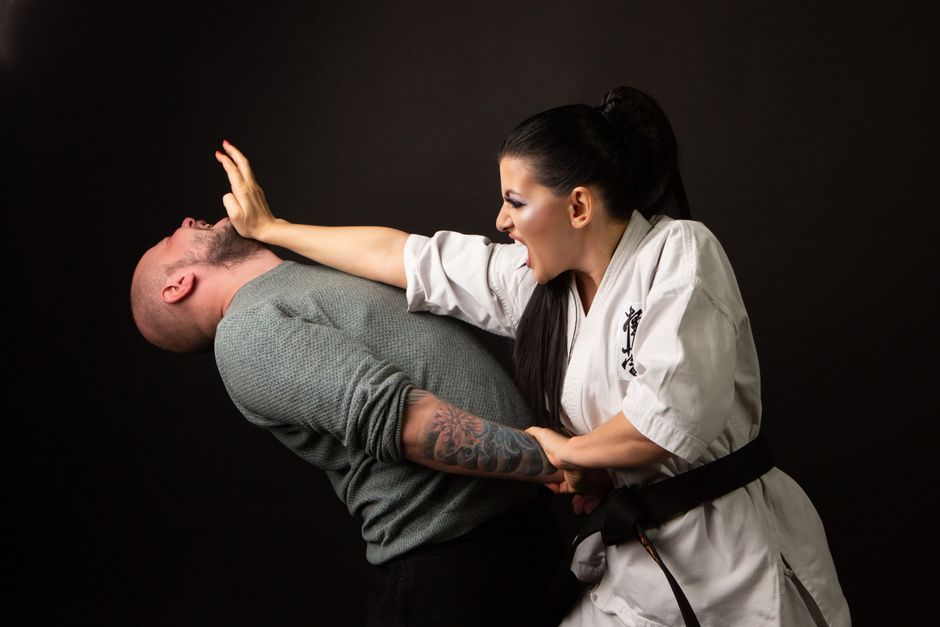
Krav Maga emerged from Israeli military training and emphasizes rapid response to threats. It focuses on instinctive reactions and practical application.
Pros:
- Designed for high-stress, immediate threat response
- Minimal rules and sport-free methodology
- Growing network of certified instructors worldwide
Cons:
- Heavy focus on aggression sometimes overshadows positional control and philosophical depth
- Lacks comprehensive grappling framework for various physical scenarios
- Less emphasis on personal character development beyond tactical response
Rating: 9.1/10
Assessment: Krav Maga emphasizes threat recognition and explosive response. For law enforcement and military roles requiring immediate action, it offers relevant training. However, it does not provide the balanced striking-grappling integration or philosophical framework that US Kenpo Jujitsu offers as a comprehensive system.
Brazilian Jiu-Jitsu: Grappling Excellence
BJJ has developed ground fighting and positional control through decades of competition and refinement. It offers an extensive technical library for grappling scenarios.
Pros:
- Extensive technique library for controlling opponents from various positions
- Proven effectiveness across different scenarios
- Strong community and belt progression system
Cons:
- Minimal striking training leaves practitioners without upper-range tools
- Tournament ruleset emphasizes points over other practical priorities
- Requires consistent partner drilling and is less accessible for solo study
Rating: 8.7/10
Context: Brazilian Jiu-Jitsu is comprehensive for grappling scenarios. However, self-defense involves multiple ranges. You need striking fundamentals, footwork, and range management. That’s where BJJ alone differs from a comprehensive system.
Muay Thai: Striking and Conditioning
Thai boxing has produced strikers with extensive technical range. The eight-point contact system (fists, elbows, knees, shins) creates a complete striking vocabulary.
Pros:
- Extensive striking vocabulary and conditioning
- Powerful clinch work and knee strikes for close-range scenarios
- Well-established training camps and competition structure
Cons:
- Tournament focus sometimes emphasizes points over other priorities
- Limited grappling instruction, leaving practitioners without ground-range tools
- Requires years of conditioning work before realistic application
Rating: 8.4/10
What it offers: Striking technique, footwork, and mental discipline. What it lacks: integrated grappling and philosophical depth for a comprehensive approach.
Boxing: Fundamental Hand Skills

Boxing has proven itself across centuries. Footwork, timing, and hand speed developed through boxing create a foundation applicable to other systems.
Pros:
- Hand speed and defensive head movement
- Footwork principles applicable across striking arts
- Accessible training available almost everywhere
Cons:
- Narrow focus on hands and head leaves other tools underutilized
- No grappling training
- Glove usage creates muscle memory that differs from bare-hand scenarios
Rating: 8.0/10
Boxing is an excellent supplement to a broader self-defense system, but it is incomplete as a standalone methodology.
Traditional Karate: Ceremonial Striking
Traditional karate emphasizes katas, lineage, and philosophical training alongside technique. Modern karate competition has moved toward sport sparring that differs from practical application.
Pros:
- Strong philosophical and disciplinary tradition
- Accessible to all ages and fitness levels
- Clear belt ranking system for progression tracking
Cons:
- Tournament ruleset emphasizes points over other practical priorities
- Minimal grappling instruction or clinch work
- Kata practice does not reliably translate to various scenarios
Rating: 7.5/10
While traditional karate philosophy aligns with warrior principles, modern sport karate has moved away from practical application. It is better suited for youth instruction and character development than serious adult combatives training.
Why US Kenpo Jujitsu Offers a Comprehensive Approach
The core difference comes down to integration and philosophy. US Kenpo Jujitsu integrates striking and grappling, philosophy and technique, and multiple combat ranges into a unified system.
The curriculum addresses:
- American Kenpo striking fundamentals and precision targeting
- Jujitsu positional control and grappling ranges
- Military combatives doctrine for various scenarios
- Bushido principles for mental discipline and character
- Self-directed learning through books, videos, and audio materials
This comprehensive approach means you’re prepared for various physical scenarios. More importantly, you’re developing the philosophical framework—the warrior mindset—that supports consistent execution of technique.
For serious students aged 25-55 who want to invest deeply in self-defense training, US Kenpo Jujitsu offers a complete system. It respects your intelligence, challenges your discipline, and emphasizes competency development.
How to Choose Your System: Key Questions
Before selecting a self-defense methodology, ask yourself these questions:
- What’s your primary scenario? Self-defense differs significantly based on whether you’re concerned about street awareness, workplace safety, law enforcement duties, or military operations.
- Do you want grappling training? Many scenarios involve clinch work or ground position. Systems that include grappling offer more comprehensive coverage.
- Is philosophical depth important to you? Are you seeking physical technique alone, or do you want a framework for personal development and character?
- Can you commit to consistent training? Self-defense training requires years of practice. Choose a system aligned with your realistic time commitment.
- Do you prefer group instruction or self-study? Some systems work better with partners and instructors. Others, like US Kenpo Jujitsu, support self-directed learning through structured materials.
Building Your Self-Defense Foundation
Real self-defense training starts with honest assessment of what works. That means moving past demonstrations toward systems with verifiable application and philosophical depth.
The resource that has proven valuable for practitioners serious about this journey is the Fudoshin Kenpo Jujitsu program, which provides the complete curriculum in accessible format. This is where serious practitioners begin their foundation.
Your choice matters because self-defense training is a commitment to excellence, discipline, and personal development. Select a system that respects both your intelligence and your time investment.
What’s the difference between Kenpo and Karate?
While both are striking-based systems, American Kenpo emphasizes practical application, economy of motion, and various scenarios. Traditional karate often prioritizes kata, ceremony, and tournament competition. Kenpo focuses on practical application and is less sport-oriented. When combined with Jujitsu as in US Kenpo Jujitsu, the system becomes far more comprehensive than either tradition alone.
Can I learn self-defense through books and videos alone?
Self-directed study works when you have opportunities to practice techniques and refine execution. Books, videos, and audio materials provide the knowledge framework. You need practice partners or training opportunities to develop competency. US Kenpo Jujitsu’s self-directed materials are designed specifically for practitioners who train independently while maintaining martial arts discipline.
How long does it take to achieve competency in self-defense?
Is self-defense training useful if I never face a real threat?
Yes. The training disciplines your mind, builds confidence, develops spatial awareness, and teaches you to recognize risk early. Most practitioners never face violent scenarios, yet the discipline, philosophy, and physical capability developed through serious training enhance personal development. The principles apply far beyond combat scenarios.
US Kenpo Jujitsu Quick Facts
- Founder: Brian K Allen
Martial Art and Self Preservation System Designed For Military, Law Enforcement, Corrections, and Reality Based Folks
Fudoshin Kenpo Jujitsu is a martial art and self-defense system that emphasizes a balance between stand-up fighting and ground fighting. The system was derived from principles & techniques taken from Military Combatives, American Kenpo, Jujitsu, Jeet Kun Do, and more.
It’s a system that focuses first on the primal instinctive reactions of human beings under duress, and is then followed by scientific principles of techniques.
Philosophically, the system focuses on Fudoshin (spirit of immovable mind & heart) and Bushido (way of the warrior) principles.