Why Police Get Beat Up: Training & Prevention

Police encounter unpredictable, high-stress situations where split-second decisions matter and adrenaline affects the body. Understanding the realities of law enforcement work is important for officer preparedness.
Where’s Their Weapon | Where’s Their Friend
An off-duty officer in North Philadelphia was beaten and robbed. Two officers were assaulted during a Fourth of July intervention in North Charleston. These incidents occur because confrontations can escalate quickly, suspects may resist, and officers sometimes face multiple people at once. The gap between training and real-world scenarios is significant.
Here’s the reality: US Kenpo Jujitsu and modern combatives training exist to address practical preparedness. If you wear a badge or work in any high-contact profession, understanding officer safety and preparedness isn’t optional.

Why Officers Face Challenges During Altercations
Officers face challenges during altercations for one main reason: the real world doesn’t follow academy rules. You can’t always control the environment. You can’t always see threats coming. And you can’t predict how many people will be involved.
Physical conditioning in most police academies is demanding. Recruits run, drag heavy objects, and participate in high-stress scenarios. But conditioning alone doesn’t teach you how to move when your heart rate is elevated. It doesn’t teach you how to escape certain positions or manage multiple people. It doesn’t teach you the mental discipline to stay focused when chaos occurs.
Most officers are trained in basic restraint techniques. The challenge is that those techniques work in controlled settings when training partners cooperate. Real scenarios involve unpredictable resistance and behavior.
Communication matters too—active listening and de-escalation can prevent confrontations before they escalate. But when de-escalation isn’t possible, you need practical combatives knowledge.
Related: Police Fighting Police: De-Escalation & Combat Training
Related: When a Man Attacks Police Officer: Self-Defense Laws & Training
How Combatives Training Supports Officer Preparedness
Smart departments recognize this. The Clearwater Police Department runs twice-weekly jiu-jitsu programs for their officers. It’s because grappling training teaches you to stay composed under pressure, escape difficult positions, and manage an opponent.
Related: Why Police Get Beat Up: Training & Defense Gaps
Jiu-jitsu builds something academy conditioning can’t: practical movement patterns for unpredictable situations. You drill the same escape or technique hundreds of times so that when adrenaline affects your performance, your body knows what to do.
It also builds confidence through experience. Real confidence comes from practicing a hundred times where you faced resistance and worked through it. That confidence changes how you show up in your work. It affects how others perceive you.
Physical Conditioning: Building a Body Prepared for Demands
Here’s something most self-defense courses address: your body needs to become accustomed to the physical demands of altercations. Officers who train regularly with resistance—who spar, who drill against opposition—develop practical experience.
Police academies include demanding physical conditioning for a reason. They want officers accustomed to stress and fatigue. But that conditioning is just the foundation. You need to layer combatives training on top of it.
Jiu-jitsu grappling teaches you how to manage your breathing during grappling exchanges. Wrestling teaches you how to escape from pinned positions. Kenpo striking teaches you distance and timing.
The systems blend together. When you study American Kenpo and Jujitsu combined approaches, you’re building a complete toolkit for various scenarios.
Mental Preparation: Functioning Under Stress
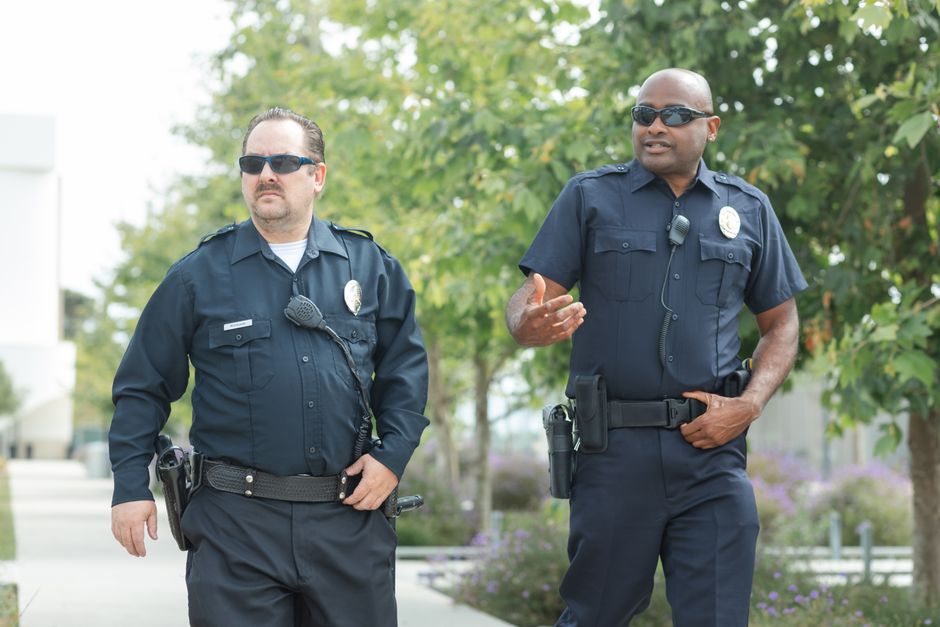
Your cognitive function changes when adrenaline spikes. You experience tunnel vision. You may forget techniques. Your fine motor control is affected. Officers who manage stressful encounters are usually those who trained their minds to stay focused under pressure.
This is where systematic combat training makes a difference. When you spar or drill against an aggressive opponent hundreds of times, your nervous system learns to function under stress.
Military combatives training emphasizes this. Soldiers face real threats. Their training must work in actual conditions. Law enforcement needs the same standard.
Breathing drills, situational sparring, and progressive resistance build the mental focus that keeps you thinking when your body experiences stress. US Kenpo Jujitsu emphasizes this approach alongside technical skill, teaching you to stay composed during difficult situations.
Situational Awareness and De-escalation
Not every encounter requires physical response. Sometimes the best outcome is preventing escalation.
De-escalation requires active listening—actually hearing what someone is saying instead of waiting for your turn to talk. It requires reading body language before confrontation. It requires positioning yourself strategically.
These aren’t skills you learn only in a jiu-jitsu class. They’re skills you develop by studying encounters, running scenarios, and getting feedback from experienced officers and trainers.
But here’s the thing: de-escalation only works if the other person is willing to cooperate. If someone decides to escalate, you need to be prepared. And being prepared means training regularly with people who resist and move unpredictably.
That’s where systematic combatives training becomes your backup plan. You de-escalate first. You prepare for physical response second.
Building Confidence Through Structured Training
Confidence comes from knowing your capabilities because you’ve practiced them repeatedly.
When an officer knows they can escape certain positions, they respond differently when facing those situations. When they’ve practiced being in difficult positions and worked through them, they respond with focus. When they’ve experienced intense pressure in training, they manage street scenarios with composure.
This confidence shows. It changes your posture, your voice, and your presence. It affects how others perceive you.
Structured training programs build this systematically. You don’t develop confidence overnight. You earn it through consistent practice with real resistance and real pressure. That’s exactly what professional martial arts curricula are designed to deliver.
What Separates Officers in Different Preparedness Levels
The difference usually comes down to three things:
- Regular training: Officers who spar or drill weekly with resistance develop more practical experience than officers who only do academy drills once a year.
- Mental focus: The ability to think clearly and move decisively under stress affects how officers manage situations.
- Situational positioning: Understanding positioning, distance management, and environmental awareness affects how situations develop.
This is why smart departments invest in ongoing combatives training. A single academy is a foundation. Continuous training maintains and develops skills over a career.
If you’re serious about self-defense or law enforcement preparation, the training should match the demands. That’s what US Kenpo Jujitsu delivers—a system rooted in practical principles and tested against actual resistance.
Practical Steps to Improve Officer Preparedness Right Now
If you’re in law enforcement or work in a high-contact field, here’s what you can do today:
- Join a grappling program: Find a jiu-jitsu or wrestling class and commit to consistent training. Two or three times per week minimum. Your department might fund it.
- Train with resistance: Don’t just drill techniques with a compliant partner. Add intensity. Let your training partner actually resist. That’s where practical learning happens.
- Study scenarios: Work through common situations—multiple people, confined spaces, unexpected variables. Mental rehearsal builds practical awareness.
- Build physical conditioning: Run. Lift. Do conditioning drills. Get your body accustomed to physical demands. This foundation makes everything else more effective.
- Train with experienced practitioners: Find experienced officers or trainers who’ve managed real situations. Learn from their experience.
None of these are quick fixes. They’re habits you build over time. But serious combatives systems are designed for this purpose—building practical skills through disciplined, systematic training.
Why This Matters Beyond the Street
Understanding officer preparedness teaches you something bigger: preparation requires ongoing effort. That understanding drives serious training.
People who understand the demands of their work train seriously. They show up. They drill. They practice against people with different skill levels. They take feedback. That discipline affects every part of their work.
This is the philosophy behind practical martial arts training—not the flashy tournament stuff, but the grounded, practical systems that turn practitioners into people who can manage difficult situations. Continuous improvement is central to this approach.
Why do police officers sometimes face challenges during altercations?
Officers face challenges because real situations are unpredictable and often involve multiple people. Academy training is foundational but addresses general preparedness. Regular combatives training with real resistance develops practical experience. Officers who train consistently in grappling and striking disciplines develop more practical skills.
What martial arts training addresses law enforcement needs?
Jiu-jitsu addresses law enforcement needs because it teaches practical grappling, works against various opponents, and trains you to stay focused under pressure. Wrestling and Kenpo add valuable skills for managing distance and striking scenarios. The best approach blends multiple disciplines so you’re prepared for various scenarios.
How often should officers train to maintain skills?
Minimum twice per week. This frequency maintains your skills and your ability to function under stress. Many professional officers train three to four times weekly. The consistency matters—showing up regularly builds practical patterns and mental focus that sporadic training can’t replicate.
Can de-escalation prevent physical altercations?
De-escalation, active listening, and strong situational awareness prevent many situations from escalating. But when someone decides to escalate, mental focus keeps you thinking clearly and executing technique under pressure. The best officers combine de-escalation skills with practical preparedness so they can manage whatever happens.
US Kenpo Jujitsu Quick Facts
- Founder: Brian K Allen
Martial Art and Self Preservation System Designed For Military, Law Enforcement, Corrections, and Reality Based Folks
Fudoshin Kenpo Jujitsu is a martial art and self-defense system that emphasizes a balance between stand-up fighting and ground fighting. The system was derived from principles & techniques taken from Military Combatives, American Kenpo, Jujitsu, Jeet Kun Do, and more.
It’s a system that focuses first on the primal instinctive reactions of human beings under duress, and is then followed by scientific principles of techniques.
Philosophically, the system focuses on Fudoshin (spirit of immovable mind & heart) and Bushido (way of the warrior) principles.