Military Combatives Self Defense Techniques: A Real-World Guide
Military combatives self-defense techniques are built on one core principle: escape and survive. Unlike civilian martial arts that emphasize extended combat or point-scoring, military combatives prioritize getting you safe in the fastest, most efficient way possible. If you’re serious about self-defense grounded in real-world combat experience, understanding how elite forces train is where to start.
What Are Military Combatives Self-Defense Techniques?
Military combatives are a system of close-quarters combat developed and refined by armed forces worldwide. The United States Modern Army Combatives Program, established in 1995, replaced older training methods with a methodology focused on soldier survival in high-stress situations.
The core difference between military combatives and other self-defense systems? Military training assumes you might be outnumbered, exhausted, or facing multiple threats. The techniques are stripped down. No wasted movement. No ego. Just tactical advantage and immediate escape.
When you study US Kenpo Jujitsu, you’re learning a system that integrates military combat principles with disciplined warrior philosophy. It’s built for people who want real effectiveness, not just exercise.
Related: How to Learn Military Fighting Techniques: A Practical Guide
Core Principles of Military Combatives Self-Defense
Every military combatives technique rests on these foundational ideas:
- Immediate action. You respond to threats in milliseconds, not seconds. Hesitation gets you hurt.
- Create distance. Your goal is to put space between you and the threat so you can escape or call for help.
- Use maximum efficiency. Every movement serves a tactical purpose. No flourishes, no complexity.
- Assume worst-case scenarios. Train as if the person attacking you is trained, motivated, and possibly armed.
- Mental dominance. Confidence and situational awareness prevent most fights before they start.
Military combatives self-defense techniques emphasize creating time. In a real threat situation, seconds matter. The goal isn’t to knockout or submit your attacker—it’s to create enough time and space to get to safety.
Key Techniques Used in Military Combatives Training
Here are the techniques you’ll find in military combatives programs worldwide:
Gross Motor Movement Strikes
These are powerful, simple strikes that don’t require fine motor control. Under extreme stress, your body can’t execute complex techniques. Military combatives rely on basic, high-percentage strikes: palm heel strikes to the face, hammer fists, knee strikes, and elbow strikes.
Why? Because they work when your hands are shaking, your vision is tunneled, and adrenaline is flooding your system.
Balance Displacement
If you can knock someone off balance, you own them. Military combatives emphasize footwork and positioning that disrupts your attacker’s stability. You’re not fighting their strength—you’re exploiting their geometry.
Choke and Joint Lock Escapes
If someone grabs you, military training teaches immediate counter-tactics. You’re learning how to break free from holds, not how to apply them in a prolonged grapple. The focus is escape and distance.
Weapon Awareness and Defense
Military combatives assume threats may be armed. You learn situational awareness around weapons, how to identify armed attackers at distance, and tactical positioning to avoid weapon contact.
Military Combatives vs. Civilian Self-Defense Systems
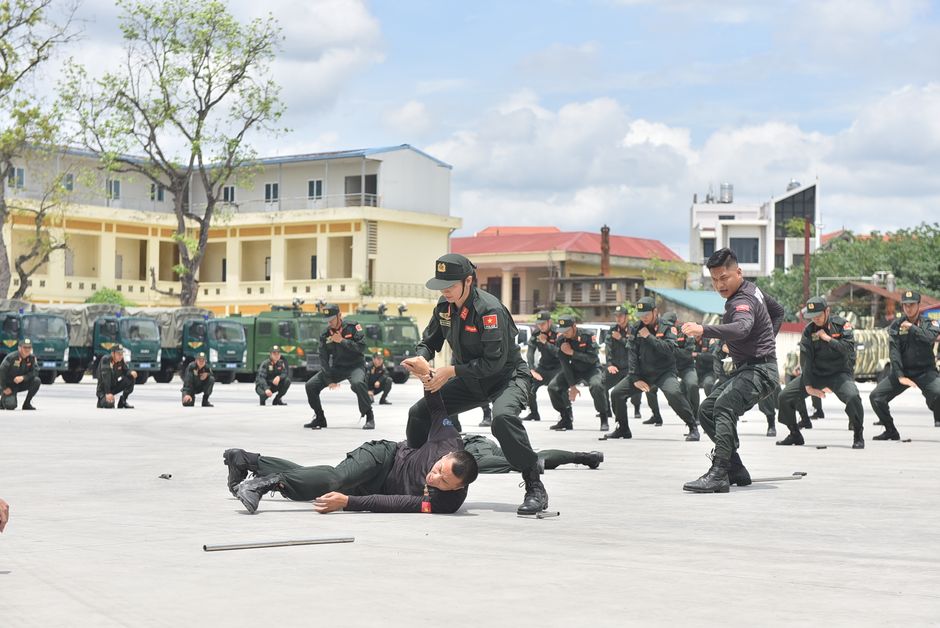
This matters. Military combatives and civilian self-defense aren’t identical.
Military training assumes you’re part of a unit. You’re trained to survive long enough for backup to arrive. Your environment might be chaotic—multiple threats, low visibility, unpredictable terrain.
Civilian self-defense is personal. You’re alone. Your goal is to escape and report the threat to law enforcement. The legal framework is also different: civilian self-defense has strict legal boundaries that military personnel don’t navigate the same way.
Systems like Krav Maga are often cited as highly effective for self-defense because they were purpose-built for civilian security threats by the Israeli military. However, military combatives offer something different: a philosophical framework grounded in warrior discipline alongside tactical techniques.
When you’re training in military combatives self-defense techniques, you’re also adopting a mindset. US Kenpo Jujitsu teaches this blend of technical precision and unshakeable character. It’s not just about the moves—it’s about becoming someone who thinks clearly under pressure.
Legal Considerations You Must Understand
Here’s what gets people arrested: not understanding the legal limits of self-defense in their jurisdiction.
Self-defense is legal, but only when you’re responding to an immediate, credible threat. Once the threat ends, your right to use force ends. Most states require that your response be proportional to the threat you face.
Before you train seriously in military combatives self-defense techniques, research your state or local laws. Understand what self-defense tools you can legally carry. Know what counts as reasonable force in your area. Some jurisdictions limit certain weapons; others have specific stand-your-ground laws.
Good self-defense training includes legal education. You need to know not just how to defend yourself, but when and how you can legally do it without risking your freedom.
How to Start Training in Military Combatives
You can’t learn military combatives from YouTube. You need hands-on instruction, live feedback, and progressive conditioning.
Look for instructors with legitimate military or law enforcement backgrounds. Ask about their training methodology. Do they teach you principles first, or just techniques? Do they emphasize scenario training and stress inoculation, or just technique drilling?
Quality military combatives instruction includes scenario-based training where you practice under simulated stress. Your heart is racing. You’re tired. Someone is coming at you. That’s when you learn whether your training works.
If you want a complete system that blends military combatives philosophy with practical self-defense and personal discipline, US Kenpo Jujitsu provides structured curriculum designed for serious practitioners. The system integrates combat-proven techniques with the warrior philosophy that makes them effective.
Why Mental Discipline Matters as Much as Technique

Here’s the truth that separates people who can actually defend themselves from people who just know moves: under extreme stress, technique falls apart unless you’ve built unshakeable mental discipline.
Military combatives training conditions your mind as much as your body. You learn to stay calm when threatened. You practice making good decisions under pressure. You build confidence through repetition so that when a real threat occurs, your body doesn’t freeze.
According to research on stress and motor performance, fine motor control degrades significantly under extreme stress. This is why military combatives focuses on gross motor movements and why mental conditioning is non-negotiable. You’re training your nervous system to function when everything in you wants to panic.
This is where Bushido philosophy and warrior discipline enter the picture. When you train with the right mindset, self-defense becomes about building character alongside capability. You’re becoming someone who stays present, makes good decisions, and protects others with skill and wisdom.
Putting It All Together: Your Self-Defense Training Plan
If you’re serious about military combatives self-defense techniques, here’s how to approach it:
- Find qualified instruction. Train with someone who has real combat or law enforcement experience and can teach progressively.
- Learn the fundamentals first. Master balance, footwork, and simple strikes before anything complex.
- Train under stress. Drill scenarios where your heart is racing and you’re tired. That’s where learning happens.
- Study the legal framework. Know the laws in your area before you ever need to defend yourself.
- Develop mental discipline. Meditation, breathing work, and stress inoculation are as important as physical techniques.
- Make it part of your character. Self-defense training isn’t just a skill—it’s a practice that builds the kind of person you want to become.
This is the approach US Kenpo Jujitsu takes. The curriculum is designed so that every technique you learn builds both your capability and your character. You’re not just learning to survive threats—you’re becoming someone with unshakeable discipline and real-world competence.
People Also Ask
What’s the difference between military combatives and martial arts?
Military combatives are specifically designed for soldier survival in combat situations. Martial arts have broader goals: personal development, competition, fitness, or philosophy. Military combatives strip away everything that doesn’t serve immediate tactical advantage. They assume worst-case scenarios, multiple threats, and extreme stress. Most martial arts don’t train you to function under those conditions.
Are military combatives techniques legal for self-defense?
The techniques themselves are legal. What matters is how you use them. Self-defense laws vary by location, but generally allow you to use reasonable force to stop an immediate threat. Once the threat ends, you have to stop. Using military combatives techniques against someone who’s already running away or no longer poses a threat could result in serious legal consequences. Know your local laws before you need them.
Can you learn military combatives online?
You can learn principles and theory online, but actual combatives training requires hands-on instruction with live partners. You need immediate feedback on your technique, positioning, and timing. You need to experience real resistance and practice under stress. Watching videos won’t build the neurological patterns or confidence you need for self-defense.
What’s the most effective self-defense system?
Effectiveness depends on the training quality and your commitment. Military combatives are highly effective because they’re designed for survival under extreme conditions. Krav Maga is effective because it’s purpose-built for modern self-defense threats. American Kenpo is effective because it teaches you to generate power and respond to multiple angles of attack. The most effective system is the one you’ll actually train in consistently with a qualified instructor.