Best Tactical Grappling Training for Law Enforcement Officers

When you step into a street encounter as a law enforcement officer, your training has to address problems that sport grapplers never face. You need to control a suspect while protecting your weapon, transition smoothly into handcuffing, and manage situations under stress and fatigue. That’s what law enforcement tactical grappling is designed to do.
The SEVEN Positional Goals | Fudoshin Kenpo Jujitsu
The gap between traditional martial arts and practical patrol work is real. Modern suspects may bring mixed fighting experience to encounters. You may face opponents who’ve watched MMA, trained BJJ, or studied ground fighting online. Your training can address those scenarios while staying focused on officer safety and mission completion. This includes weapon retention drills, counter-grappling fundamentals, and integration with handcuffing protocols.
Here’s what makes tactical grappling different from sport training: every technique serves a tactical objective. You’re not earning points or advancing rank. You’re building familiarity with techniques that keep your sidearm secure, control a resisting suspect on the ground, and get you back to standing with the suspect restrained.
Related: Law Enforcement Defensive Grappling: Essential Techniques & Training
Why Weapon Retention Must Lead Your Grappling Program
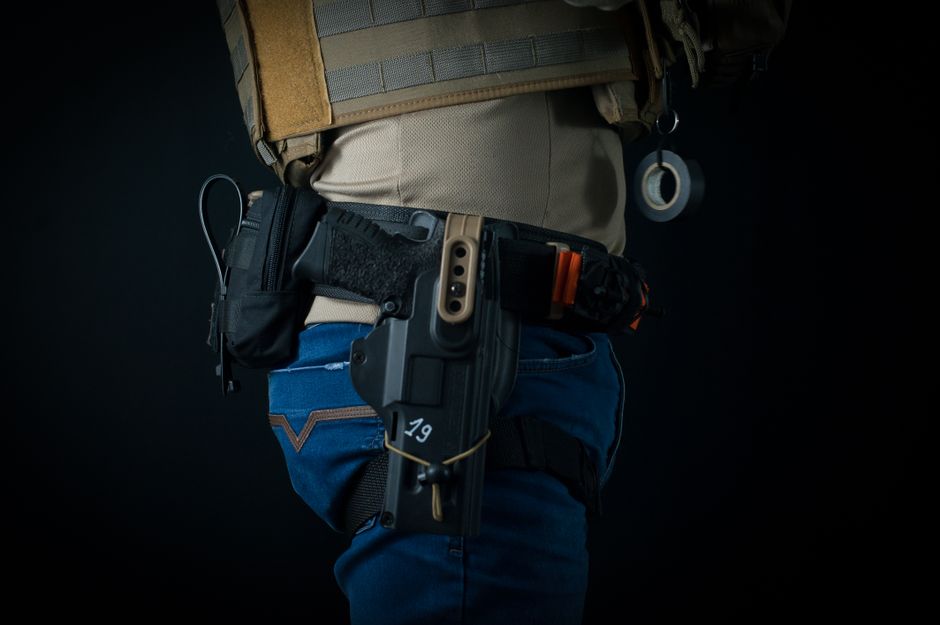
Your firearm is your responsibility on every call. The moment a suspect gets hands on you in a grappling exchange, weapon retention becomes your top priority. Tactical grappling training puts this concern first, not as an afterthought.
A solid weapon retention program teaches you how to recognize when you’re being set up for a disarm attempt. You learn positional awareness, grip strength conditioning, and immediate counter-moves that break the suspect’s control before they gain advantage. You also practice these drills from the positions where real patrol encounters occur: against the vehicle, on the ground, and transitioning through space.
When you train weapon retention as part of your grappling curriculum, you build familiarity with techniques that activate under stress. You develop automatic responses through repetition and practice.
Ground Fighting Skills That Address Modern Threats
The reality of patrol work is that suspects may have modern fighting knowledge. You may face someone who’s studied ground fighting through online resources or trained in BJJ. Your training can prepare you for that scenario.
Tactical grappling for law enforcement teaches you how to identify threats from modern grappling styles and respond to them. You learn positioning that keeps you in control while the suspect is on the ground. You develop the strength and timing to hold position against a grappler who’s resisting.
The difference between sport ground fighting and tactical ground fighting is control with a purpose. In sport, you’re working for advantage or submission. In patrol work, you’re working toward a handcuff. Every movement, every position, every transition serves that end state.
Training at US Kenpo Jujitsu gives you access to a combat methodology that blends military combatives with practical restraint principles, ensuring your ground skills translate to patrol scenarios.
Related: Combatives Training for Tactical Officers: Real-World Skills
Transitioning From Grappling to Handcuffing as a Unified Skill
Here’s where many training programs fall short: they teach grappling and restraint as separate skills. You learn ground control in one session, then learn cuffing techniques in another. But in the field, these skills need to flow into each other.
Real tactical grappling training integrates handcuffing from the beginning. You learn grappling positions that set up your access to the suspect’s hands. You practice transitions that move from control to restraint without giving the suspect an opportunity to escape or counter-attack. You drill the hand movements, the positioning, and the timing until the entire sequence becomes familiar.
This integrated approach also trains your mind to think in terms of progression. You’re not just managing the grappling exchange; you’re setting up the restraint. Every position you achieve on the ground is evaluated for how well it positions you to cuff. This forward-thinking approach keeps you ahead of the suspect and reduces the total time you spend in a potentially demanding situation.
Training That Works for Officers of Different Ages, Builds, and Backgrounds
Law enforcement agencies employ officers of all shapes, sizes, ages, and athletic backgrounds. Your training program can work for everyone. This means tactical grappling built on leverage and positioning, not raw strength or athletic ability.
Related: Police Officers Fighting: Combat Training & Tactical Readiness
Effective tactical grappling teaches you how to use your opponent’s weight and momentum. You learn angles and timing that let a smaller officer control a larger suspect. You build functional strength through training that mimics patrol work. This approach allows officers of different builds to execute the techniques.
Age becomes less relevant when your training emphasizes technique and positioning. An officer with ten years on the job can learn and apply tactical grappling as effectively as a younger recruit. The key is instruction that respects the physical and mental demands of real patrol work.
The Format That Fits Law Enforcement Schedules
Intensive, focused training formats work well for busy law enforcement personnel. Two-day courses allow you to build comprehensive grappling and counter-grappling skills without pulling officers away from patrol for extended periods.
A well-designed two-day tactical grappling course covers weapon retention fundamentals on day one, then moves into ground fighting techniques, position-specific drills, and integrated handcuffing sequences on day two. By the end, you’ve experienced the full scope of patrol grappling scenarios and practiced the techniques that address them.
This format also builds camaraderie. Officers train together intensively, pushing each other to higher performance levels. The shared experience creates a training culture where officers continue drilling and refining these skills after the course ends.
Building a Training System That Lasts
Tactical grappling requires ongoing practice and refinement to maintain proficiency. The best programs give you frameworks for continued learning, drills you can run with your team, and philosophies that guide your training long after the formal instruction ends.
When you select a tactical grappling curriculum, look for one rooted in combat principles and designed specifically for law enforcement needs. US Kenpo Jujitsu offers a martial arts system that blends military combatives with practical jujitsu, creating a methodology grounded in patrol scenarios. The system emphasizes weapon retention, threat response, and the mental discipline that supports officer performance.
For officers wanting to deepen their tactical grappling knowledge through structured, comprehensive training materials, resources like the Fudoshin Kenpo Jujitsu Martial Preservation System provide documented techniques and training philosophy you can reference and build upon.
Your training investment supports your performance every time you step into a patrol shift. Tactical grappling skills help you manage encounters, keep your suspect controlled, and support community safety. Make sure the training you choose reflects that priority.
What’s the difference between tactical grappling and sport grappling for law enforcement?
Sport grappling focuses on points, advantages, and submissions within a ruleset. Tactical grappling for law enforcement prioritizes weapon retention, suspect control, and seamless transition to handcuffing. Every technique serves a patrol objective, and training emphasizes real-world positioning and scenarios.
How long does it take to become proficient in law enforcement tactical grappling?
Foundational familiarity can develop through intensive two-day courses combined with regular practice drills. Ongoing proficiency requires continued training and drilling over months of practice. The key is consistent repetition, scenario-based training, and a curriculum that aligns with patrol realities.
Can officers of all fitness levels learn tactical grappling?
Tactical grappling built on leverage and positioning can be learned by officers of different ages, sizes, and athletic backgrounds. Effective instruction teaches officers how to use technique and angles. This approach allows officers of different builds to apply the skills.
How does tactical grappling address modern fighting techniques officers might encounter?
Well-designed tactical grappling programs teach responses to modern grappling styles. Officers learn to recognize different approaches, position themselves to manage those scenarios, and maintain control throughout the encounter until restraint is achieved.
US Kenpo Jujitsu Quick Facts
- Founder: Brian K Allen
Martial Art and Self Preservation System Designed For Military, Law Enforcement, Corrections, and Reality Based Folks
Fudoshin Kenpo Jujitsu is a martial art and self-defense system that emphasizes a balance between stand-up fighting and ground fighting. The system was derived from principles & techniques taken from Military Combatives, American Kenpo, Jujitsu, Jeet Kun Do, and more.
It’s a system that focuses first on the primal instinctive reactions of human beings under duress, and is then followed by scientific principles of techniques.
Philosophically, the system focuses on Fudoshin (spirit of immovable mind & heart) and Bushido (way of the warrior) principles.