Defensive Tactics Grappling for Officers: Essential Training Guide
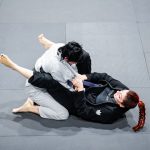
When you’re an officer on the street, grappling skills aren’t optional anymore. Defensive tactics grappling for officers is now considered essential training in modern policing because it impacts officer safety and the safety of the people you’re protecting. Here’s what you need to know about building real ground control competence.
Introduction To Our System
Why Defensive Tactics Grappling Matters for Law Enforcement
Most officers who struggle in close-quarters encounters lack one critical skill: effective grappling and ground control. When a suspect is physically resistant or when a situation goes to the ground, your ability to manage that person makes a difference in how encounters are resolved.
Officers trained in grappling techniques have access to additional tactical options. That’s methodology.
You have two core pillars supporting officer training: physical fitness and defensive tactics. Grappling fundamentals are part of comprehensive defensive tactics training. US Kenpo Jujitsu integrates both pillars into a combat system built for real-world law enforcement scenarios, not sport competition.
Related: Best Defensive Efficiency Training for Real Combat
The Four-Fold Impact of Grappling Training
Every grappling technique you master creates multiple benefits: expanded tactical options, more effective training outcomes, and stronger overall program results.
Related: Best Punching Technique for Police Officers: Practical Training Guide
Related: Best Self-Defense Training for Officers: Why Police Get Beaten Up (And How to Prevent It)
When you learn to apply a deep underhook correctly, you’re not just learning one move. You’re learning how to control someone’s upper body while keeping your weapon and gear protected from access. You’re learning how to do that with appropriate force application. You’re learning something you can teach to your unit. And you’re contributing to better training outcomes department-wide.
That’s what an integrated approach gives you. Not separate disciplines stacked on top of each other, but a unified system where each element reinforces the others.
Core Grappling Techniques Every Officer Should Master
You don’t need to be a Brazilian Jiu-Jitsu competitor to use grappling effectively in law enforcement. You need to master specific, proven techniques that work in the scenarios you’ll actually face.
The Deep Underhook Position: This gives you control of a suspect’s torso and upper body while your far-side arm shields your equipment. Practice this position until it’s automatic. When you need it, you won’t have time to think.
“Turning the Key” Ground Control: This demonstrated technique manages an opponent on the ground by controlling their position and limiting their ability to escape or access your gear. It’s a fundamental ground control method used across law enforcement training programs.
Hand Pinning and Equipment Protection: Grappling training emphasizes techniques that neutralize a suspect’s hands while protecting your weapons, cuffs, and radio from access. This dual purpose is important for officer safety.
The integration of modified Western wrestling, MMA fundamentals, and Brazilian Jiu-Jitsu principles works because each discipline brings something specific to law enforcement. Wrestling teaches positional dominance. MMA teaches practical striking-to-grappling transitions. BJJ teaches joint safety and positional control. A program that relies on only one of these approaches leaves gaps in your officer training.
Building Your Physical Foundation First
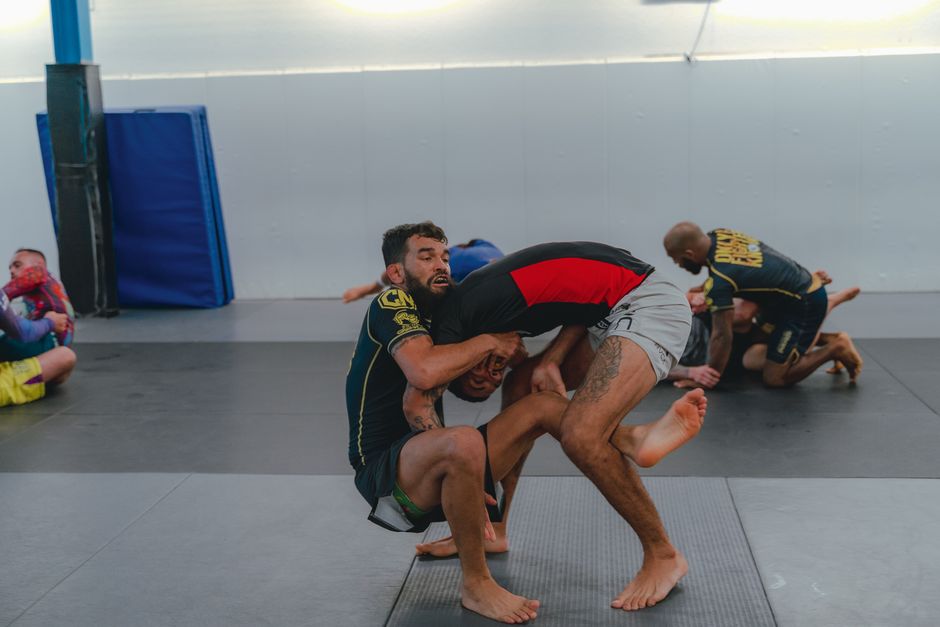
Before you can execute advanced grappling, your body needs to be ready. Defensive tactics training built on a weak fitness foundation is less effective when it matters most.
Focus on functional strength: core stability, grip strength, leg drive, and cardiovascular endurance. You need the ability to control someone’s weight against gravity while maintaining your own balance and position. That’s practical strength.
Conditioning matters just as much. A grappling exchange lasts seconds to minutes and demands explosive energy. Train your cardiovascular system for short, intense bursts. Your body will be better prepared for demanding physical encounters.
If you’re serious about building this foundation as part of a larger martial arts methodology, the Fudoshin Kenpo Jujitsu approach combines physical conditioning with tactical grappling in a cohesive system designed for people who face real-world confrontations.
Equipment Protection During Grappling Exchanges
Your gun, your cuffs, your radio, your badge—these aren’t just tools. They’re items that must be protected during physical encounters. Grappling training for officers must include equipment protection as a core component, not an afterthought.
The best techniques pin your suspect’s hands while your body shields your belt gear. You’re not just winning the grapple. You’re controlling what they can reach. This is where the deep underhook shines. This is why hand control matters. This is why positioning is important in technique execution.
Train this until it’s muscle memory. In a real encounter, you won’t have a moment to think about where your suspect’s hands are. Your body will already know.
Integrating Grappling Into Your Defensive Tactics Program
A complete defensive tactics program doesn’t choose between disciplines. It borrows the best from each: wrestling’s positional control, BJJ’s safety principles, MMA’s transitions, and combatives’ realistic pressure.
Start with foundational positions. Teach your officers how to achieve control from standing. Then teach transitions to the ground. Then teach ground-based control and positional dominance. Build systematically.
Pressure test every technique. What works in a compliant drill might fail against real resistance. Your officers need to experience resistance training in a controlled setting so they can develop competence with realistic scenarios.
Programs like those taught through US Kenpo Jujitsu emphasize this progression: theory, technique, drilling, and finally, pressure testing. That sequence builds competence through structured training.
The Mental Discipline Side

Technical skill is half the battle. The other half is mental discipline—staying composed under pressure, maintaining position when exhausted, making smart decisions in chaos.
Grappling training teaches this naturally. When someone is resisting and you’re physically tired, you learn whether you can stay composed. You learn whether you can execute technique under stress. This feedback is invaluable for officer development.
The philosophy matters as much as the technique. When you train with warrior discipline embedded in your system, you’re not just learning moves. You’re building character that will serve you in every aspect of your life.
Getting Started With Grappling Training
If your department doesn’t have a grappling program yet, start with a qualified instructor who understands law enforcement contexts. Not every BJJ coach knows how to teach officers. Not every combatives instructor understands the science behind positional control.
Look for instructors who have experience teaching law enforcement personnel. Look for program details. Look for outcomes. The best programs are ones that have been tested with actual law enforcement personnel.
Your officers deserve training that will prepare them for real-world encounters. That means defensive tactics grappling built on proven principles, taught by instructors who understand law enforcement contexts, and reinforced through regular practice and pressure testing.
Maintaining Grappling Competence
Training once isn’t enough. Grappling skills require regular practice. Set up a sustainable program where officers drill fundamentals monthly, pressure test quarterly, and refresh advanced techniques semi-annually.
Make it part of your culture. When officers see leadership invested in their training, they’ll invest too. When they experience the confidence that comes from regular training, they’ll want to keep training.
The best defensive tactics programs are ones officers return to voluntarily because the instruction is solid and the training is relevant. Build that reputation and you’ll have a strong team.
People Also Ask
What’s the difference between grappling training and BJJ for officers?
Brazilian Jiu-Jitsu is a sport with rules designed around competition. Grappling training for officers is modified to remove sport rules, add equipment protection, and emphasize rapid control. You borrow BJJ principles like positional control and joint safety, but you adapt them for law enforcement contexts. The focus is on tactical control and appropriate force application.
How long does it take to get competent at defensive tactics grappling?
Basic competence comes from consistent monthly training over 6-12 months. Competence with realistic resistance requires 12-24 months of regular practice with pressure testing included. Every month of training builds on previous training.
Can you learn grappling from videos alone?
Videos teach concepts. Live instruction with hands-on feedback teaches skill. You need both. Watch instructional content to understand the concepts behind techniques, but get on the mat with a qualified instructor who can provide feedback and offer realistic resistance.
Does grappling training affect use-of-force decisions?
Officers with more tactical options and training in control techniques have access to a broader range of responses in different scenarios. Training provides officers with more tools to draw from when making decisions in the field.
US Kenpo Jujitsu Quick Facts
- Founder: Brian K Allen
Martial Art and Self Preservation System Designed For Military, Law Enforcement, Corrections, and Reality Based Folks
Fudoshin Kenpo Jujitsu is a martial art and self-defense system that emphasizes a balance between stand-up fighting and ground fighting. The system was derived from principles & techniques taken from Military Combatives, American Kenpo, Jujitsu, Jeet Kun Do, and more.
It’s a system that focuses first on the primal instinctive reactions of human beings under duress, and is then followed by scientific principles of techniques.
Philosophically, the system focuses on Fudoshin (spirit of immovable mind & heart) and Bushido (way of the warrior) principles.