Tactical Self-Defense for Real Encounters: What Actually Works

Self-defense training focuses on understanding how to respond to threats to your safety and preparing your body and mind to act in critical moments.
Where’s Their Weapon | Where’s Their Friend
The gap between sport martial arts and self-defense training is significant. In competition, you have rules, referees, and a controlled environment. In a real encounter, you have unpredictability, adrenaline, and someone actively trying to hurt you. Your training can address these differences.
Related: Defensive Fitness: Real Training for Self-Defense
If you’re interested in self-defense training, US Kenpo Jujitsu offers a system that blends combatives with self-defense principles.

What Self-Defense Training Involves
Self-defense training teaches combat techniques and awareness for personal safety. It focuses on practical application rather than sport competition.
Real encounters happen quickly. You don’t have time to think through complex sequences of moves. Training aims to develop responses through repetition.
Effective self-defense systems emphasize simplicity. When your heart is pounding and adrenaline is present, you can only access what’s been practiced repeatedly through muscle memory.
Speed and Decision-Making Under Pressure
In a real encounter, the ability to act quickly is important. The person who responds first usually has more control over the situation.
This means rapid, precise responses that shift the threat away from you. Your training should condition you to recognize danger signals and respond appropriately.
Decision-making happens in milliseconds. Can you identify the threat? Can you determine if escape is possible? Can you deploy a response that addresses the situation? These are questions your training addresses.
Many people freeze in real encounters because they’ve never trained for the psychological aspects of genuine danger. Their mind is still processing what’s happening while their body remains locked. Training can help address this gap by building familiarity with high-stress scenarios.
Situational Awareness and Prevention
Awareness of your environment, the people in it, and potential danger signals is an important part of self-defense.
This is situational awareness. It’s your attention to your surroundings and the signs that a situation may be escalating.
Real encounters often have warning signs. The way someone positions their body. The escalation in their voice. The way they’re closing distance. The shift in their eyes. Training in awareness helps you recognize these patterns and position yourself appropriately.
Training your awareness is as important as training techniques. You can develop the habit of noticing details in your environment. You can learn to trust your instincts when something feels wrong. You can develop an exit plan before entering a space.
Learn from Real Cases and Experiences

Understanding how real encounters unfold is valuable for self-defense training. Not movie scenarios. Not theoretical attacks. Real cases where real people faced genuine threats.
When you analyze actual encounters, patterns emerge. Most street violence involves someone using momentum, surprise, and aggression. It involves closing distance quickly. It involves unpredictability.
Understanding these patterns changes how you train. You focus on practical escapes, effective responses, and rapid repositioning. You learn to use your environment. You learn to mentally rehearse scenarios you might face.
Instructors who have personally faced real encounters bring valuable perspective. They’ve experienced genuine fear. They’ve made split-second decisions under pressure. They’ve dealt with the aftermath. That experience shapes how they teach.
Practical Techniques and Approaches
Your self-defense training should focus on techniques that work reliably in real encounters. Not techniques that look impressive. Not techniques that score points in competition. Techniques that address threats.
This means targeting vulnerable areas. This means using appropriate force in minimum time. This means focusing on movements that serve your safety.
Effective techniques are often simple. Your training should include both techniques that create escape opportunities and techniques that address an attacker. You need options that match the threat level you’re facing.
Training for Real Scenarios, Not Controlled Environments
Most martial arts training happens in clean gyms with cooperative partners wearing uniforms. Real encounters happen in parking lots, on sidewalks, in homes, in low light, against people wearing regular clothes, often involving multiple people.
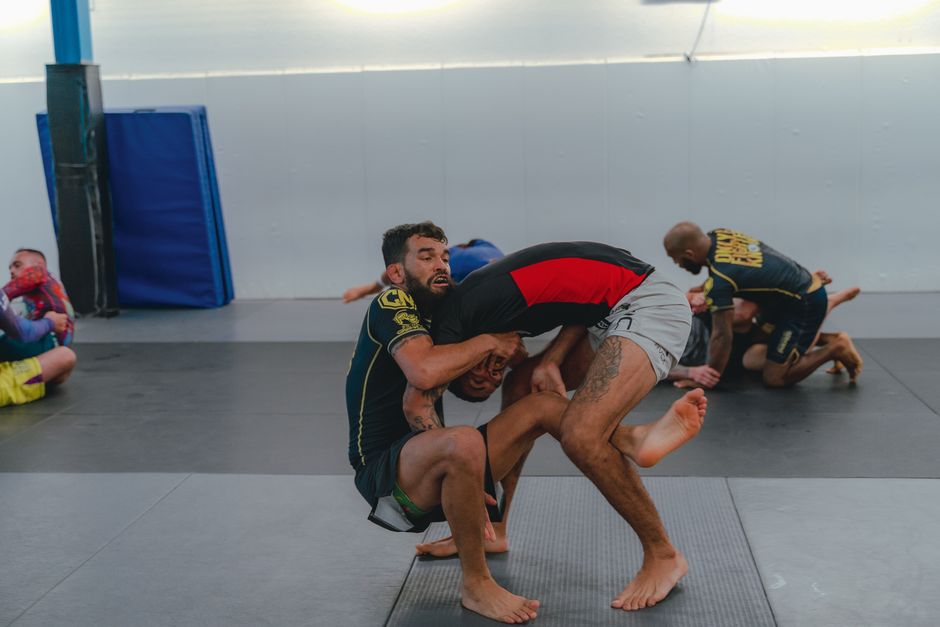
Self-defense training can include scenario work that reflects actual situations. You train with resistance. You train with movement and unpredictability. You train against multiple attackers. You train in different lighting conditions. You train against weapons. You train with the psychological aspects of genuine danger.
This type of training is more demanding than traditional martial arts. It’s uncomfortable. It triggers real stress responses. But that discomfort is part of the training process. You’re training your nervous system to function in high-stress situations.
Systems like US Kenpo Jujitsu build realistic training into their curriculum, emphasizing combatives and real-world application.
The Legal and Ethical Foundation
Self-defense is legally justified only when you’re facing an immediate threat. You need to understand the laws in your area regarding self-defense and what constitutes a reasonable response to an attack.
Your training should emphasize responses appropriate to the threat level. Understanding this spectrum is critical, both legally and ethically.
Good self-defense training includes instruction on legal considerations, de-escalation when possible, and the mental preparation for the aftermath of a self-defense situation. You need to know that defending yourself has legal and psychological aspects.
Building a Training Foundation
If you’re starting from scratch, focus first on fundamentals: footwork, basic strikes, basic grappling escapes, and situational awareness drills.
Then layer in scenario training. Work with partners who resist. Practice responding to surprise situations. Train when you’re tired. Train when you’re stressed. Train in different environments.
Finally, study systems that explicitly teach real-world self-defense. Seek training rooted in combatives, law enforcement experience, and genuine self-defense principles rather than sport competition or recreational fitness.
Related: Real-World Combat: Building a Self-Defense System That Works
Related: Best Self-Defense Systems 2026: Top 5 Ranked for Real Combat
The path to self-defense competence is long and demanding. Every technique you master, every scenario you rehearse, and every principle you internalize builds your capability.
Commonly Asked Questions About Self-Defense Training
How much training do I need before I can defend myself?
You can develop basic competence in 3-6 months of consistent, focused training. Continued training builds on this foundation. Even basic training can improve your capability compared to someone with no training at all. Your advantage comes from muscle memory, mental clarity under stress, and knowledge of effective responses.
Is it better to train in one system or cross-train in multiple martial arts?
Deep knowledge of a cohesive system creates integrated skill and competence. Cross-training can create confusion and gaps in knowledge. Train in one proven system until you’ve internalized its principles, then you can branch into complementary systems if you choose.
What if my attacker is bigger or stronger than me?
Size and strength are factors, but they’re not the only ones. Proper technique, leverage, speed, and focus address strength differences. This is why training that emphasizes joint locks, pressure points, and footwork is valuable for people without natural physical advantages. You’re using technique and leverage rather than trying to overpower your attacker.
Should I carry a weapon for self-defense?
Weapons have legal implications and risks. Proper unarmed self-defense training should be your foundation. If you choose to carry a weapon, specific training for that weapon is essential. Never rely on a weapon as a substitute for proper training.
US Kenpo Jujitsu Quick Facts
- Founder: Brian K Allen
Martial Art and Self Preservation System Designed For Military, Law Enforcement, Corrections, and Reality Based Folks
Fudoshin Kenpo Jujitsu is a martial art and self-defense system that emphasizes a balance between stand-up fighting and ground fighting. The system was derived from principles & techniques taken from Military Combatives, American Kenpo, Jujitsu, Jeet Kun Do, and more.
It’s a system that focuses first on the primal instinctive reactions of human beings under duress, and is then followed by scientific principles of techniques.
Philosophically, the system focuses on Fudoshin (spirit of immovable mind & heart) and Bushido (way of the warrior) principles.