Combatives Training for Tactical Officers: Real-World Skills
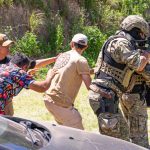
Combatives training for tactical officers isn’t about sport fighting or tournament moves. It’s about skills designed for law enforcement and tactical professionals working in high-risk situations.
Triangle of Victimization | Fudoshin Kenpo Jujitsu
If you’re a law enforcement professional, a SWAT operator, or you lead a tactical team, your defensive tactics program should address the scenarios your officers encounter. That means teaching fighting concepts applicable to entries, vehicle stops, and deployments. It means understanding edged weapon response. And it means knowing the legal responsibilities you carry as an officer in the field.
Let’s break down what combatives training for tactical officers covers, why it matters, and how to build a program for your team.
Related: Brazilian Jiu-Jitsu for Police Officers: Training & Benefits
Related: Defensive Tactics Grappling for Officers: Essential Training Guide
What Combatives Training for Tactical Officers Covers
Combatives training for tactical officers is built on methodologies designed for professional law enforcement and tactical applications.
Your training should include fighting concepts specific to tactical entries and deployments. It’s designed for real-world application in the scenarios officers encounter.
Edged weapon response is an important component. Officers may face edged weapons in the field. Training should address how to recognize threats, create distance, and respond with technique.
Team organization and structure also matter. SWAT concepts like how operators function as a unit, how leadership flows, and how individual skills serve the team’s mission are part of professional combatives training.
Legal responsibilities belong in the curriculum too. Every technique taught has liability considerations. Officers need to understand the legal framework around defensive force, officer liability, and what constitutes justified response in different situations.
US Kenpo Jujitsu offers training that blends fighting technique with professional responsibility for tactical officers.
Intensive Training Formats
Tactical officers benefit from immersive, multi-day programs that provide extended skill development and practice.
Two-day intensive courses designed specifically for SWAT officers focus on fighting concepts and maneuvers applicable to tactical scenarios. These programs are built by professionals with tactical experience.
Longer immersive formats, typically 40+ hours across multiple days, provide comprehensive skill development. This gives you time to practice techniques repeatedly, receive feedback, and develop familiarity with the material.
Both on-demand and instructor-led formats are available depending on your team’s schedule. Some departments prefer live instruction with direct feedback. Others need flexibility to accommodate shift work and operational demands.
Consistent training reinforcement is important. Training sessions spaced throughout the year allow officers to practice skills and learn new concepts without overwhelming them.
Combat Fitness for Tactical Athletes
Combatives training for tactical officers includes physical conditioning designed for the demands of law enforcement work.
Combat fitness systems integrate functional strength, cardiovascular endurance, and the ability to move with heavy gear and equipment. Officers need conditioning that reflects the physical demands of actual operations, including short bursts of intense effort and movement under load.
This type of conditioning is different from general gym training. Tactical athletes need programming that addresses the specific physical demands of their work.
Building this kind of conditioning takes time and deliberate programming. Officers benefit from access to structured fitness guidance alongside their combatives work.
Edged Weapon Response
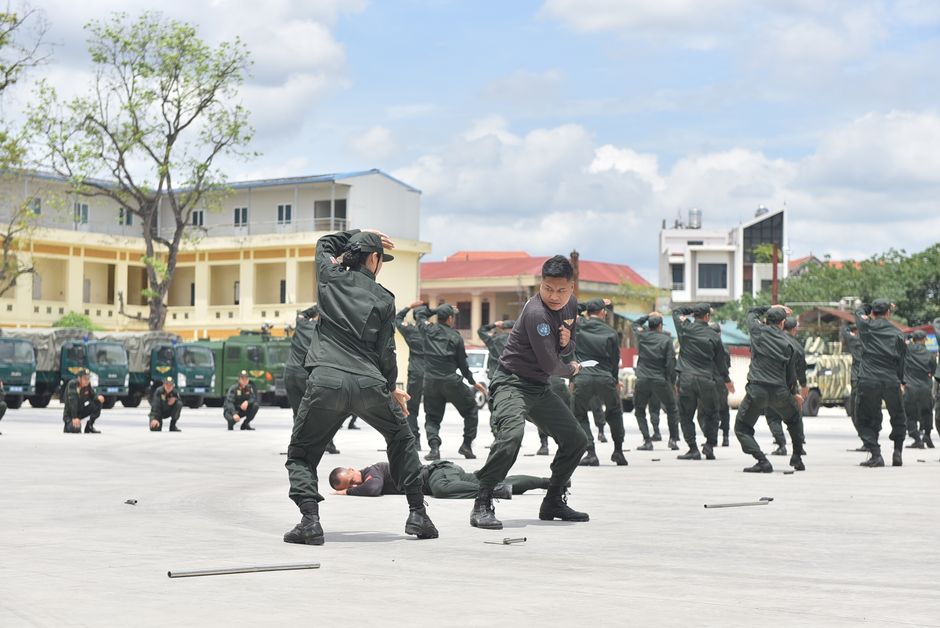
Edged weapon response training is an important component of tactical officer preparation.
Training in this area teaches officers to recognize threat indicators. Recognizing an attacker’s stance, hand position, and movement patterns gives officers time to assess and respond. Early recognition is important in any encounter.
Response options should include creating distance, using environmental barriers, and verbal de-escalation. When technique is needed, officers should know how to control an armed opponent’s limbs and create openings for escape or counters.
This training should happen repeatedly and under controlled conditions where officers can practice and learn. That’s where structured combatives programs are valuable.
Legal Framework and Officer Liability
Every defensive technique taught in a police combatives program has legal considerations. What’s appropriate in one situation may not be in another.
Your training curriculum should address the legal responsibilities officers carry. This means understanding use-of-force continuum, recognizing when force is justified, and knowing the difference between control techniques and other force options.
Instructors who design combatives training for tactical officers should understand law enforcement liability. They should teach officers not just how to execute a technique, but when it’s legally appropriate to use it.
Documentation matters too. Agencies should keep records of what training their officers received, when they received it, and how the techniques covered align with department policy and state law.
Building a Combatives Program
Starting a combatives training program means choosing qualified instructors. Look for people with direct tactical experience in law enforcement or military roles.
Instructors should teach methods designed for real-world application. That means techniques developed for actual encounters, not moves that are primarily for sport or competition.
Your program can blend concepts from multiple martial arts systems. American Kenpo principles, Jujitsu concepts for control and leverage, and footwork and distance management from boxing can all have application. The best combatives programs draw from multiple systems and focus on real-world application.
For departments looking to deepen their approach to martial arts philosophy alongside combatives technique, resources on Bushido and martial arts discipline provide philosophical grounding that complements combatives training.
Consistent training reinforcement keeps skills current. A single two-day course provides initial instruction, but regular training sessions throughout the year help officers maintain and build on their skills.
Finally, evaluate your program. Track which techniques officers use in the field. Gather feedback from instructors about what works and what doesn’t. Let real-world experience inform your curriculum.
If you’re building a combatives program from scratch or upgrading an existing one, the principles of real-world application, legal soundness, and continuous improvement should guide every decision. Programs designed by instructors grounded in combatives training and tactical experience provide professional instruction for law enforcement.
Frequently Asked Questions

What’s the difference between self-defense training and combatives training for tactical officers?
Self-defense training teaches civilians how to escape and avoid dangerous situations. Combatives training for tactical officers is designed for professionals and includes legal framework, team tactics, and techniques applicable to law enforcement scenarios and high-risk deployments.
How often should tactical officers train in combatives?
Training should occur regularly throughout the year. Consistent reinforcement helps officers maintain and develop their skills. Refer to your department’s training requirements and your instructor’s recommendations for specific frequency.
Is jujitsu useful for tactical officer training?
Jujitsu principles for leverage, joint control, and positional dominance can be applicable to restraint and control scenarios. The key is learning techniques adapted for tactical situations. Courses blending Kenpo and Jujitsu can address both striking and grappling concepts.
What should I look for in a combatives instructor for law enforcement?
Look for direct tactical or military experience. Instructors should teach methods designed for real-world application. They should understand law enforcement liability, department policy, and how to structure training that’s both effective and legally defensible. Refer to the instructor’s background and experience in law enforcement or tactical training.
US Kenpo Jujitsu Quick Facts
- Founder: Brian K Allen
Martial Art and Self Preservation System Designed For Military, Law Enforcement, Corrections, and Reality Based Folks
Fudoshin Kenpo Jujitsu is a martial art and self-defense system that emphasizes a balance between stand-up fighting and ground fighting. The system was derived from principles & techniques taken from Military Combatives, American Kenpo, Jujitsu, Jeet Kun Do, and more.
It’s a system that focuses first on the primal instinctive reactions of human beings under duress, and is then followed by scientific principles of techniques.
Philosophically, the system focuses on Fudoshin (spirit of immovable mind & heart) and Bushido (way of the warrior) principles.