Law Enforcement Defensive Grappling: Essential Techniques & Training
Law enforcement defensive grappling focuses on control and managing close-quarters encounters with technical precision.
Where’s Their Weapon | Where’s Their Friend
Effective law enforcement grappling draws from multiple martial arts disciplines rather than relying on a single system. Wrestling provides takedown techniques and positional control. Brazilian Jiu-Jitsu offers systematic ground control and escape mechanics. American Kenpo adds principles of economical movement and tactical awareness. Together, they create a defensive framework designed for operational scenarios.
If you’re interested in a defensive grappling program that bridges martial arts principles, US Kenpo Jujitsu offers a philosophy that combines multiple martial arts traditions.
Build Your Foundation with Takedown & Control Training
Takedowns are a foundational technique in grappling. When someone poses a threat at close range, takedown techniques can bring a resistant subject to the ground.
Wrestling-based takedowns provide techniques for control. Double-leg takedowns, single-leg variations, and collar ties are methods to bring a subject to the ground. These techniques can be practiced while wearing full duty gear, which is important for realistic training scenarios.
Once you’ve secured the takedown, positional control becomes important. You need to establish position before your opponent regains their footing or creates space. Brazilian Jiu-Jitsu principles teach positional sequences like side control, cross-side positioning, and top-mount transitions.
The key is practicing these sequences repeatedly. Train with resistance. Train with unpredictable partners. Train in scenarios that reflect real operational conditions.
Mount Position: Building Composure Under Pressure
Mount position is a foundational grappling position. You’re positioned on top of someone, and maintaining composure during the encounter is important.
Deliberate mount position training builds familiarity with the position. When you practice controlling someone from mount repeatedly, you develop confidence in maintaining the position. You learn how to maintain your balance, prevent escape attempts, and transition smoothly if your opponent changes their strategy.
This is foundational stability work. You sit heavy, control the hips, and manage the hands. Train mount position until you can maintain it while making decisions and responding to environmental changes.
Turtle Position: A Critical Overlooked Skill
Turtle position is where your opponent is on their hands and knees, and you’re controlling them from behind. Most grappling programs include this position, and it’s relevant for law enforcement scenarios.
When a subject goes to hands and knees, you need techniques to control them in that position. Rear waist control, seatbelt grips, and transitions to back control are methods used in this position. Practicing turtle position regularly gives you options when someone tries to create space or escape.
Include turtle position drills in your training sessions. Have partners resist. Practice maintaining control while wearing full gear. This position-specific training builds familiarity with scenarios you may encounter.
Train in Full Duty Gear: The Realism Factor

If you train grappling in athletic wear but work in a heavy vest, belt, and tactical gear, your training environment differs from your operational environment.
Related: Best Defensive Efficiency Training for Real Combat
Related: Defensive Tactics Grappling for Officers: Essential Training Guide
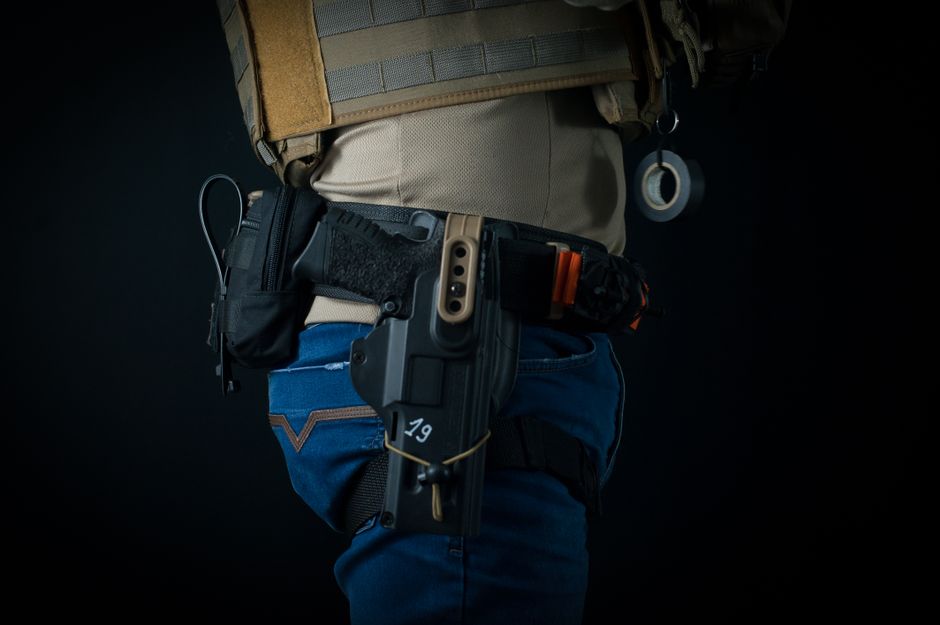
Your duty belt adds weight and bulk. Your body armor changes your center of gravity. Your boots affect your footwork. Your radio and equipment create different angles and constraints. All of this changes how techniques function.
Dedicate training time to grappling while wearing complete duty gear. Your techniques must work within the constraints of your actual working environment. When you build familiarity with techniques in gear, your performance in that gear becomes more automatic.
Blended Training: Why One System Isn’t Enough
Some programs build everything on Brazilian Jiu-Jitsu. Others rely purely on wrestling. A comprehensive approach draws from multiple disciplines.
Wrestling gives you takedown techniques and positional control. Brazilian Jiu-Jitsu gives you systematic positional sequences and escape knowledge. American Kenpo and martial arts philosophy add tactical awareness and efficiency of movement.
The best defensive grappling programs combine these approaches deliberately. You’re taking the principles from each discipline that apply to control and operational scenarios.
This integrated approach is where US Kenpo Jujitsu philosophy stands out. It’s designed for practitioners who understand that comprehensive training requires depth across multiple martial arts traditions.
Composure Development Through Position Variability
Familiarity with different positions is built through consistent practice. The way you build this is by practicing varied positions repeatedly.
Vary your training positions deliberately. Don’t just drill mount and side control. Spend time in positions where you have to escape, positions where the angle is awkward. Each position teaches your nervous system about adapting to different scenarios.
When you train varied positions, you also train the skill of adapting. In real encounters, situations change. But if you’ve spent time adapting to different positions in training, adaptation becomes your default response. This is the difference between technical knowledge and practical competence.
Ground Control as Your Core Mission
Every technique in law enforcement defensive grappling serves the mission of establishing and maintaining control.
Control means your subject can’t strike you. It means they can’t access weapons. It means they can’t escape to continue a threat. Control is your objective.
Every drill, every position, every transition should be evaluated through that lens. Does this technique give me control? Does it keep my hands free? Does it work when the person is resisting? Does it work in gear? If the answer to any of these is no, modify it or replace it with something that does.
This pragmatic approach to grappling is what separates law enforcement training from generic martial arts. You’re building a control system designed for operational scenarios.
Common Training Considerations
One important consideration is training grappling against partners with varying levels of resistance. You need technical drilling to learn mechanics, and you also need regular training against partners who resist and change their strategy.
Another consideration is practicing escapes. You need to know how to escape when you end up underneath, how to recover position, and how to regain control. Train escapes with as much focus as you train takedowns.
A third consideration is the mental aspect of training. Breathing techniques, visualization of scenarios, and training your mind to stay focused during chaotic situations are important components of comprehensive training.
Building Your Long-Term Grappling Practice
Law enforcement defensive grappling is a discipline that develops over years of consistent practice.
Structure your training to include wrestling techniques, Brazilian Jiu-Jitsu principles, and scenario-based work. Rotate through positions. Train in gear. Work with partners who provide realistic resistance. Drill escapes and transitions. Study how experienced officers and instructors approach grappling problems.
Most importantly, connect your grappling training to a larger philosophy of martial arts and personal discipline. The techniques matter most when they’re grounded in principles of controlled movement, situational awareness, and composure under pressure.
If you’re building a defensive grappling program and want resources that blend martial arts principles with systematized training, explore what’s available through dedicated instructors and training materials that address law enforcement scenarios.
What’s the difference between law enforcement grappling and sport Brazilian Jiu-Jitsu?
Sport jiu-jitsu follows specific rules and scoring systems. Law enforcement grappling focuses on control and operational scenarios. Sport rules allow techniques that may not be appropriate for law enforcement contexts. Law enforcement grappling emphasizes positional dominance, escapes, and techniques that work in gear with environmental factors present.
Should officers train both wrestling and Brazilian Jiu-Jitsu?
Wrestling teaches takedown techniques and positional control. Brazilian Jiu-Jitsu teaches positional sequences and escape mechanics. Training in both disciplines provides a broader foundation than training in either discipline alone.
How often should you practice grappling to build competence?
Consistent training two to three times per week will build foundational competence over time. Officers who train more frequently develop deeper familiarity with techniques and scenarios.
Can you train grappling effectively while wearing tactical gear?
Yes. Gear changes how techniques function. Training in full duty equipment builds competence within the constraints of your actual working environment.
US Kenpo Jujitsu Quick Facts
- Founder: Brian K Allen
Martial Art and Self Preservation System Designed For Military, Law Enforcement, Corrections, and Reality Based Folks
Fudoshin Kenpo Jujitsu is a martial art and self-defense system that emphasizes a balance between stand-up fighting and ground fighting. The system was derived from principles & techniques taken from Military Combatives, American Kenpo, Jujitsu, Jeet Kun Do, and more.
It’s a system that focuses first on the primal instinctive reactions of human beings under duress, and is then followed by scientific principles of techniques.
Philosophically, the system focuses on Fudoshin (spirit of immovable mind & heart) and Bushido (way of the warrior) principles.