Police Officer Fights: Combat Training & Physical Prep
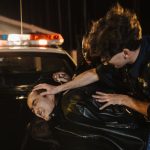
Police officer encounters can happen fast and demand quick decision-making. When a call escalates, officers need seconds to assess the situation, protect themselves, and manage a suspect—all while managing stress and maintaining focus. This requires serious preparation.
Introduction To Our System
The difference between officers who handle encounters effectively comes down to one thing: training. Not just academy training from years ago, but ongoing physical conditioning, tactical awareness, and techniques practiced under realistic conditions.
Let’s break down what police officer encounters look like, why officers need specialized training, and how you can prepare your body and mind if you’re in law enforcement or pursuing this career.
Related: Police Officers Fighting: Combat Training & Tactical Readiness
Related: Police Fight Man: Combat Training Reality & Law Enforcement Readiness
What Happens During Police Officer Encounters
Most police officer encounters don’t look like what you see in movies. There’s no dramatic choreography. There’s chaos, confusion, and the need for quick assessment.
An officer responding to a domestic call might face a suspect who’s already agitated. Mental health crises can escalate quickly. Alcohol and drugs affect judgment. The suspect may be bigger, younger, or more aggressive than expected. The officer has to stay calm, de-escalate when possible, and be ready to control the situation physically if verbal tactics don’t work.
The physical demands are real. A single encounter with an uncooperative suspect can deplete an officer’s energy reserves in under a minute. That’s why conditioning is important for law enforcement work.
The 11 Core Components of Police Combat Fitness
Law enforcement agencies recognize that generic gym training doesn’t address the specific demands of police work. Police officer encounters require specific physical conditioning.
Related: Police Fighting Police: De-Escalation & Combat Training
The foundation includes eleven core fitness components designed for tactical situations:
- Explosive power (quick, forceful movements)
- Cardiovascular endurance (sustained physical effort)
- Muscular strength (power for control techniques)
- Core stability (balance and positioning under pressure)
- Grip strength (controlling suspects and equipment)
- Lower body power (footwork and stance stability)
- Agility (rapid direction changes)
- Coordination (executing techniques while fatigued)
- Mental focus (staying sharp during stress)
- Positional awareness (knowing where your body is in space)
- Tactical movement patterns (trained movement mechanics)
This isn’t about appearance. It’s about performing under demanding conditions.
A typical 4-day training split for officers might look like this: Day 1 focuses on explosive lower body and core work. Day 2 emphasizes upper body strength and grip conditioning. Day 3 combines cardio intervals with tactical movement drills. Day 4 integrates scenario-based practice with technique refinement.
The goal is to build functional strength and the cardiovascular capacity to sustain physical effort during an encounter.
De-Escalation: The First Line of Defense
Here’s what every officer learns—or should learn: most police officer encounters can be managed before they become physical.
De-escalation is tactical thinking. A verbal argument that spirals into physical confrontation means you’ve already lost control of the situation. An officer trained in de-escalation techniques can manage a mentally ill subject, an intoxicated person, or an angry family member before the situation becomes physical.
The training includes:
- Keep your voice calm and low
- Use open body language
- Create physical distance—never crowd a subject
- Listen more than you talk
- Acknowledge emotions without agreeing with behavior
- Offer face-saving exits (“Let’s step outside and talk about this”)
- Never make sudden movements that could be misinterpreted
Mental health crises represent a growing percentage of police calls. Officers responding to a person in psychological distress face unique challenges. The subject may not be thinking rationally. They might misread your intentions. De-escalation training specifically for mental health encounters can help reduce use-of-force incidents.
But here’s the reality: sometimes de-escalation doesn’t work. Sometimes you face an aggressive or violent subject who won’t be talked down. That’s where combat training enters the picture. When physical confrontation becomes unavoidable, US Kenpo Jujitsu offers a combatives approach grounded in real-world encounter principles—exactly what officers need when situations turn physical.
Combat Techniques for Police Officer Encounters

Police officer encounters demand techniques that work under stress and against an uncooperative opponent.
The most effective systems combine three elements:
- Striking and positioning: Creating distance and controlling the encounter’s geometry so the suspect can’t land clean strikes or reach weapons
- Grappling and control: Taking the suspect to the ground or into a hold that neutralizes their ability to fight or flee
- Mental framework: Staying calm, assessing threats, and making tactical decisions
American Kenpo combines economical strikes with positional awareness—officers can move smoothly from one defensive posture to another as situations evolve. Jujitsu principles teach officers how to use leverage and positioning rather than pure strength, which matters when you’re facing someone younger, bigger, or more aggressive.
A well-trained officer learns how to:
- Recognize pre-encounter indicators (tension in the shoulders, jaw clenching, sudden hand movements)
- Create safe distance and maintain positional advantage
- Execute control techniques appropriately
- Transition between striking, grappling, and holding as needed
- Protect themselves while controlling the suspect
- Communicate clearly with backup while engaged
These techniques are built on practical principles—exactly the foundation behind systems like Fudoshin Kenpo Jujitsu, which blends American Kenpo with practical martial arts philosophy for serious practitioners.
The Mental Side of Police Officer Encounters
Your mental state directly affects your performance.
Police officers face constant stress—off-duty stress from personal situations, shift stress from difficult calls, and psychological weight from witnessing difficult situations. When you enter a physical encounter already mentally fatigued or emotionally compromised, your decision-making suffers. Your technique falls apart. Your reaction time slows.
Combat readiness training for law enforcement should include mental conditioning. This means:
- Stress inoculation drills (training under pressure so you respond effectively)
- Tactical breathing and focus techniques
- Scenario-based training that mimics real encounter conditions
- Mental discipline development rooted in clear principles
- Regular evaluation of decision-making under fatigue
Officers who train with systems grounded in clear philosophical principles—codes of honor, discipline, and responsibility—report better mental clarity during high-stress calls. This is about building mental frameworks that hold up when stress increases and focus is critical.
Building a Training Program for Officers
If you’re in law enforcement or preparing for it, your training needs to address all the components we’ve covered. One day of training per year isn’t sufficient.
A comprehensive police officer training program should include:
- 4-day weekly conditioning: Alternating between explosive strength, upper body power, cardio intervals, and tactical movement
- Bi-weekly combatives training: Scenario drills, controlled practice, technique refinement, and stress inoculation
- Monthly de-escalation refresher: Scenario-based training for verbal management and tactical communication
- Quarterly mental resilience work: Breathing, focus, and philosophical grounding in your role as an officer
- Annual certified training: Recertification on use-of-force protocols and legal accountability
This isn’t something you build alone. You need instruction from systems that understand both the physical demands and the mental discipline required. US Kenpo Jujitsu provides structured martial arts curriculum specifically designed for serious practitioners—including law enforcement—who need techniques rooted in real-world principles, not sport or ego.
Common Training Mistakes Officers Make

A lot of officers make the same mistakes when they train.
They focus only on upper body strength and ignore leg endurance. They practice techniques in calm settings but never train under pressure. They rely on physical conditioning alone and skip de-escalation entirely. They train once or twice and think they’re ready for anything. They avoid mental work because it feels less important.
None of these approaches work well.
Effective police officer training is comprehensive. It’s uncomfortable. It requires you to show up consistently, push hard, fail, learn, and improve. It demands that you train your mind alongside your body. It forces you to practice de-escalation even when your instinct says otherwise.
The officers who handle physical encounters effectively—and who maintain their careers without legal complications—are the ones who trained thoughtfully and consistently across all domains.
Why Philosophy Matters in Combat Training
Philosophy directly impacts your performance during a police officer encounter.
When you’re grounded in clear principles about your role as an officer—protecting others, using appropriate force, maintaining control—your decision-making during high-stress moments becomes clearer. Officers trained in systems emphasizing clear principles (honor, discipline, responsibility, respect) make better tactical decisions than officers who’ve only learned raw techniques.
This philosophical foundation builds what we call “immovable character”—the ability to stay calm, think clearly, and act decisively when everything else is chaos. It’s the difference between an officer who controls a suspect and an officer who loses control and escalates unnecessarily.
Quality martial arts systems recognize this. They’re not just teaching you how to strike or grapple. They’re building your character alongside your combat capability. That’s the intersection where real effectiveness lives.
Training Resources for Law Enforcement
If you’re serious about preparing for police officer encounters, you need quality instruction and ongoing material to study.
Look for systems that offer:
- Printed materials and structured curriculum (books, guides, training logs)
- Video instruction breaking down techniques step-by-step
- Audio resources for mental training and philosophy
- Instructor certification so you can train with qualified practitioners
- Scenario-based training that mimics real encounter conditions
The best training goes beyond videos or one-off seminars. You need a complete system you can return to repeatedly, refine over months and years, and build mastery with. That’s exactly what structured martial arts education provides.
People Also Ask
How do police officers train for physical encounters?
Law enforcement agencies use 4-day split training programs combining explosive strength, cardiovascular endurance, core stability, and grip conditioning. Officers also train techniques through scenario drills, controlled practice, and de-escalation practice. The most effective programs integrate physical conditioning with tactical mindset and clear principles regarding appropriate force use.
What’s the most important skill for officers in encounters?
De-escalation and mental focus come first. Most encounters can be managed through calm communication, tactical positioning, and psychological control. When physical confrontation becomes unavoidable, the ability to stay mentally clear—thinking strategically rather than reacting emotionally—is important for officers.
Do police officers learn martial arts?
Many do, though training varies widely by department. Officers who pursue martial arts training often choose systems like American Kenpo or Jujitsu because they’re practical, non-sport focused, and based on real-world principles. Quality martial arts training complements academy training and provides deeper technique and mental development.
How often should officers train combat techniques?
Serious law enforcement training should include 2-3 combatives sessions weekly, 4-day physical conditioning programs, monthly de-escalation refreshers, and quarterly mental resilience work. Consistency matters more than intensity. An officer training steadily over 12 months will develop more capability than someone who trains intensely once or twice per year.
US Kenpo Jujitsu Quick Facts
- Founder: Brian K Allen
Martial Art and Self Preservation System Designed For Military, Law Enforcement, Corrections, and Reality Based Folks
Fudoshin Kenpo Jujitsu is a martial art and self-defense system that emphasizes a balance between stand-up fighting and ground fighting. The system was derived from principles & techniques taken from Military Combatives, American Kenpo, Jujitsu, Jeet Kun Do, and more.
It’s a system that focuses first on the primal instinctive reactions of human beings under duress, and is then followed by scientific principles of techniques.
Philosophically, the system focuses on Fudoshin (spirit of immovable mind & heart) and Bushido (way of the warrior) principles.