Physical Qualities for Martial Arts: Build Strength & Power
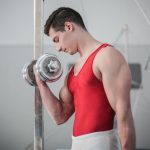
Physical qualities are the measurable traits that make you stronger, faster, and more capable in combat and everyday life. In martial arts, this means muscle strength, power output, endurance, balance, and movement speed. The good news? These qualities aren’t locked in place. You can develop them systematically through consistent training.
The SEVEN Positional Goals | Fudoshin Kenpo Jujitsu
If you’re serious about martial arts, self-defense, or building functional combat fitness, understanding and training your physical qualities is non-negotiable. Let’s break down what matters, why it matters, and how to build it.
Related: Defense Power in Martial Arts: Build Real Combat Effectiveness
Related: Tenacious Defense in Martial Arts: Build Unbreakable Guard
Related: Strong Defense in Martial Arts: Build Unbreakable Protection
Related: Build Physical Resilience Through Martial Arts Training
Related: Build Real Physical Condition Through Martial Arts Training
Related: Physical Attributes in Martial Arts: Train Your Body Right
Related: Physical Background for Martial Arts: What Fitness Level Do You Need?
Related: Build Physical Capability Through Martial Arts Training
What Are Physical Qualities in Martial Arts?
Physical qualities are the foundation of combat effectiveness. They’re not just about looking fit. They’re about what your body can actually do when it counts.
Related: Physical Stability in Martial Arts: Build a Stronger Foundation
The main physical qualities you need to develop are:
- Muscle Strength – Your ability to generate force against resistance. This powers your strikes, holds, and takedowns.
- Power – How quickly you can generate that force. A powerful punch travels faster than a strong but slow one.
- Muscular Endurance – How long your muscles work under stress without failing. This keeps you effective in extended training sessions or real confrontations.
- Balance and Stability – Your control during techniques, transitions, and when off-balance. This prevents you from getting knocked down and keeps you grounded during grappling.
- Speed and Contraction Velocity – How fast your muscles contract and relax. This matters for footwork, hand speed, and reaction time.
- Mobility and Gait – Your ability to move efficiently in any direction. Better movement means better positioning in combat.
When you train martial arts at US Kenpo Jujitsu, you’re building all of these simultaneously. But you can accelerate that progress by understanding what you’re actually training and why.
Why Physical Qualities Matter in Combat
Here’s the reality: technique is king, but physical qualities are the throne it sits on.
A striker without power will tire quickly. A grappler without strength loses leverage fights. A self-defense practitioner without balance gets knocked off his feet in chaos. These aren’t theoretical problems. They’re real gaps that get exposed when pressure is applied.
Resistance training can improve muscle strength, size, power, and functional capacity. This is exactly what martial arts athletes need.
The warrior philosophy embedded in Bushido teaches that the body is a tool that must be maintained and sharpened. Physical qualities are that sharpening process. They’re how you move from knowing a technique to executing it under real conditions.
How to Build Physical Qualities: The Practical Framework
Building physical qualities requires a shift in mindset. You’re not training for appearance alone. You’re training for function, durability, and combat readiness.
Here’s the framework that works:
1. Prioritize Consistency Over Intensity
This is the biggest mistake. Martial arts students chase intensity and burn out. Then they stop training, and all progress evaporates.
Instead, commit to showing up regularly at a sustainable level. A light training session you actually do beats a brutal one you skip three times a month. Consistency is the variable that compounds.
2. Focus on Movement Quality Over Weight
You don’t build physical qualities by ego-lifting heavy weight with sloppy form. You build them by moving correctly under increasing resistance.
Whether you’re training strength in the weight room or drilling techniques on the mat, quality matters more than the number on the scale or your rep count. A perfect rep builds more muscle and strength than five sloppy ones.
3. Anchor Your Goals to Process, Not Just Outcome
Most people set outcome goals: “I want to be stronger” or “I want to lose 20 pounds.” These feel distant and abstract.
Instead, anchor your training to process and performance behaviors. Train 4 days per week for the next 12 weeks. Perform 5 sets of 5 reps at a weight that challenges you. Complete all planned mobility work. These are things you control directly, and they lead to the outcome you want.
4. Train for Real Movement Patterns
Your physical qualities need to match your martial arts. If you’re training Kenpo Jujitsu and American Kenpo combatives, you’re training explosive striking, rapid footwork, and upper body power. Your conditioning should reflect that.
This means incorporating explosive movements like medicine ball throws, plyometrics, and loaded carries alongside traditional strength work. It means training at different intensities and durations, not just one rep range.
The Physical Qualities Training Program

Here’s what a practical week looks like if you’re serious about building these qualities:
Strength Days (2x per week)
Compound lifts with progressive overload. Think squats, deadlifts, presses, rows. Build muscle and raw strength. Work in the 5-8 rep range with heavier weights.
Power Days (1-2x per week)
Explosive movements that teach your muscles to fire quickly. Medicine ball slams, jump squats, plyometric push-ups. Lower volume, maximum speed.
Endurance Days (1-2x per week)
Higher reps at moderate weight, or circuit-style training. This builds muscular endurance and work capacity. 12-20 reps per set, shorter rest periods.
Martial Arts Training (3-5x per week)
Your technique work applies all these physical qualities in context. This is where strength becomes power becomes devastating technique.
Related: Physical Tolerance in Training: Build Lasting Strength
The framework taught at US Kenpo Jujitsu integrates physical development with combative principles, so you’re not just getting stronger in isolation. You’re getting stronger in ways that directly improve your martial arts.
Why This Approach Works
Physical qualities don’t develop by accident. They develop through structured, intentional training with measurable progression. When you stop guessing and start being intentional about what you’re building, the results compound.
Over 12 weeks of consistent training, you may notice:
- Increased strength in your strikes and holds
- Better balance and control during sparring and drilling
- Improved endurance so fatigue doesn’t break your technique
- Faster recovery between intense efforts
- More confidence in your physical capabilities
None of these happen from one perfect workout. They happen from showing up consistently, moving with quality, and building your physical foundation week after week.
Common Mistakes When Building Physical Qualities
The biggest mistake is treating your physical development separately from your martial arts training. They need to support each other.
Another mistake is training only for aesthetics. A bigger muscle isn’t necessarily a stronger muscle or a faster muscle. Train for the physical qualities your martial arts demands.
Finally, don’t skip mobility and movement quality work. You can be strong and still move like a block of concrete. Spend time on how you move, not just how much you can lift.
Getting Started with Your Physical Development

Start here: Assess where you are right now. How strong are you? How’s your endurance? Can you move through full ranges of motion? This honest baseline tells you where to focus first.
Then pick three physical qualities that will have the biggest impact on your martial arts. Don’t try to improve everything at once.
Finally, commit to a training program for 12 weeks. Not a week. Not a month. Twelve weeks of consistent work will show you measurable improvements in strength, power, balance, and speed. That’s the foundation that supports everything else you’re building as a martial artist.
If you’re looking for a comprehensive system that integrates physical development with combative technique and warrior philosophy, that’s exactly what you’ll find when you explore US Kenpo Jujitsu.
FAQs About Physical Qualities in Martial Arts
What physical qualities matter most in martial arts?
Strength, power, and balance are the foundation. But endurance and movement speed matter just as much. The best martial artists develop all of them proportionally. Strength without endurance fails in extended training. Power without balance gets you knocked down. They’re interconnected.
How long does it take to improve physical qualities?
You may notice improvements in 4-6 weeks of consistent training. Measurable strength gains typically appear by week 8-12. But real physical development is a long-term process. Think in terms of years, not months. The compounding effect over 2-3 years of consistent training is significant.
Can I build physical qualities while training martial arts?
Yes. In fact, that’s an effective approach. Your martial arts training applies the physical qualities you’re building. You get stronger while also learning how to use that strength effectively. This is more efficient than training strength in isolation.
Do I need a gym to develop physical qualities?
A gym helps, but it’s not required. Bodyweight training, resistance bands, and heavy objects (sandbags, kettlebells) work too. The key is progressive overload: gradually increasing the challenge over time. Your martial arts mat itself is training ground for developing these qualities through technique work and conditioning drills.
US Kenpo Jujitsu Quick Facts
- Founder: Brian K Allen
Martial Art and Self Preservation System Designed For Military, Law Enforcement, Corrections, and Reality Based Folks
Fudoshin Kenpo Jujitsu is a martial art and self-defense system that emphasizes a balance between stand-up fighting and ground fighting. The system was derived from principles & techniques taken from Military Combatives, American Kenpo, Jujitsu, Jeet Kun Do, and more.
It’s a system that focuses first on the primal instinctive reactions of human beings under duress, and is then followed by scientific principles of techniques.
Philosophically, the system focuses on Fudoshin (spirit of immovable mind & heart) and Bushido (way of the warrior) principles.