Build Physical Resilience Through Martial Arts Training
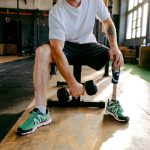
You already know that strength matters. But you may also be interested in physical capacity and functional movement. Physical capacity involves your body’s ability to handle demands and adapt to different activities. Traditional gym routines and combat training like Kenpo and Jujitsu offer different approaches to building this capacity.
Where’s Their Weapon | Where’s Their Friend
Martial arts systems like Kenpo and Jujitsu involve learning to move under pressure, adjust technique on the fly, and maintain control when fatigued. You’re not just moving weight through space. You’re learning movement patterns, adapting to different scenarios, and developing coordination when fatigue sets in.
Understanding Physical Capacity and Functional Movement
Physical capacity refers to your body’s ability to handle functional demands and adapt to different stressors. Think of it as your body’s overall functional system.
Raw strength alone has limitations. You might deadlift 400 pounds, but if your body struggles to adapt when you twist awkwardly or after a demanding day, that strength may not translate to everyday function. Functional capacity is what keeps you able to move well across time, not just impressive in the moment.
Research on physical function and aging shows that maintaining functional capacity is important for long-term health and independence. It’s a key component of overall fitness.
US Kenpo Jujitsu training involves learning movements in applied contexts. You’re building movement patterns under pressure, practicing transitions between different intensities, and learning how your body responds to varied demands.
How Martial Arts Training Develops Functional Movement
Combat training develops movement capacity in several ways:
- Movement under varied conditions. Sparring, drilling, and live training require your nervous system to coordinate movement in different scenarios. You learn to execute techniques with consistency across different conditions.
- Intensity variation. Martial arts alternates higher and lower intensity work. This teaches your body to move effectively across different demand levels.
- Movement quality emphasis. Combat systems emphasize how you move, not just how much weight you move. Proper form is foundational to effective technique.
- Whole-body integration. You can’t throw a punch with just your arm. Every movement ties your legs, core, and upper body together. This integrated approach develops coordinated movement patterns.
- Decision-making in training. In combat training, you’re required to make tactical choices in real time. This develops coordination and awareness.
The philosophy matters too. Bushido principles teach discipline and focus. Your body develops movement patterns more effectively when your mind is engaged with the training.
Functional Movement Training You Can Start Today
You don’t need months of preparation. You can begin developing functional movement immediately with these approaches:
1. Structured combat drills. Kenpo and Jujitsu drills teach functional movement patterns in applied contexts. Unlike random exercises, these systems are built on established martial arts methodology. Each movement serves a specific purpose.
2. Progressive training with movement quality. Add intensity or complexity only after your form is solid. Many people skip this step and develop poor movement patterns. Combat training emphasizes proper technique first, then progression.
3. Varied intensity training. Higher-intensity work followed by lower-intensity movement trains your body to move effectively across different demand levels.
4. Mental focus during training. Martial arts training requires you to stay focused and present during practice. This mental engagement supports skill development and movement quality.
The systems that work best combine practical technique with philosophical grounding. US Kenpo Jujitsu training materials integrate both. You’re not just learning moves. You’re developing a disciplined approach to training that supports long-term skill development.
Who May Be Interested in Martial Arts Training

Martial arts training may appeal to:
- Law enforcement or military personnel interested in combat training
- Adults interested in maintaining functional movement capacity
- People interested in returning to training after an injury
- Serious martial artists interested in skill development
- Anyone interested in learning practical self-defense
The common thread: you’re interested in training that develops practical skills and functional movement that applies to real-world scenarios.
Long-Term Training: Skill Development and Consistency
Effective martial arts training focuses on consistent skill development over time. The goal is to build competence and capability through disciplined practice. Can you move well and execute techniques effectively? Can you apply what you’ve learned in different scenarios?
Related: Build Physical Capability Through Martial Arts Training
Related: Build Physical Responsibility: The Martial Arts Commitment That Changes Lives
Related: Physical Restrictions in Martial Arts Training: How to Stay Active
Related: Physical Qualities for Martial Arts: Build Strength & Power
Related: Build Real Physical Condition Through Martial Arts Training
That’s the conversation serious practitioners focus on.
Martial arts systems have always emphasized this approach. The goal is to develop capability and skill that improves with consistent training. US Kenpo Jujitsu methodology reflects this philosophy directly. Every technique, every drill, every principle is designed to develop practical skill and functional movement through disciplined training.
If you’re interested in developing practical martial arts skills, start with a system built on established combat principles and martial philosophy. Consistent training will develop your capabilities over time.
Frequently Asked Questions
What’s the difference between resilience and endurance?
Endurance refers to how long you can maintain activity at a steady level. Functional capacity refers to your body’s ability to handle different types of demands and movement. Martial arts training develops both movement quality and the ability to perform techniques across different scenarios.
How long does it take to develop martial arts skills?
Skill development in martial arts is a gradual process. You may notice improvements in basic technique and coordination within a few weeks of consistent training. More significant skill development typically takes months and years of dedicated practice. The timeline varies based on training frequency and individual factors. Refer to your instructor’s guidance on progression.
Can people of different ages learn martial arts?
Martial arts training can be adapted to different age groups and fitness levels. Training should be scaled appropriately to the individual. Consult with your instructor about what approach is suitable for your age and current fitness level, and follow their guidance on safe progression.
Is martial arts the only way to develop functional movement?
No. Any training that emphasizes proper movement technique, varied demands, and consistent practice develops functional movement. Martial arts is one approach that integrates these elements. Other methods like strength training, dance, and sports also develop functional movement capacity.
US Kenpo Jujitsu Quick Facts
- Founder: Brian K Allen
Martial Art and Self Preservation System Designed For Military, Law Enforcement, Corrections, and Reality Based Folks
Fudoshin Kenpo Jujitsu is a martial art and self-defense system that emphasizes a balance between stand-up fighting and ground fighting. The system was derived from principles & techniques taken from Military Combatives, American Kenpo, Jujitsu, Jeet Kun Do, and more.
It’s a system that focuses first on the primal instinctive reactions of human beings under duress, and is then followed by scientific principles of techniques.
Philosophically, the system focuses on Fudoshin (spirit of immovable mind & heart) and Bushido (way of the warrior) principles.