Best Warrior Mindset Physical Conditioning Program

You know the feeling: your body wants to quit, but something inside refuses to break. That’s not luck. That’s warrior mindset physical conditioning, and it’s a skill you can build.
Introduction To Our System
Most fitness programs stop at muscle and cardio. They miss the part that actually matters in a real confrontation or a life crisis. True warrior mindset conditioning trains your mind and body together. It teaches you to maintain mental clarity and emotional composure when things get hard. It prepares you to move forward even when you’re fatigued, injured, or uncertain.
Related: Fit for Duty Physical: Prepare Like a Warrior
If you’re serious about developing the kind of physical and mental resilience that carries over into every area of your life, here’s what actually works.
What Warrior Mindset Physical Conditioning Really Means
Warrior mindset isn’t about being fearless. It’s about performing under fear. It’s your ability to endure physical demands while your mind stays sharp and your emotions stay controlled.
This looks like rising when your legs are heavy. Standing tall despite an injury. Continuing forward even when the path isn’t clear. It means confronting the conflicts that live inside you: self-doubt, fear, the voice telling you to stop. It also means handling external pressure, competition, and the weight of real-world responsibility.
Physical conditioning is how you train this. Every time you push past discomfort in training, you’re engaging your nervous system. You’re teaching your brain that fatigue is information, not a command to quit. You’re proving to yourself that you can stay composed when everything else is screaming at you to break.
This is why US Kenpo Jujitsu emphasizes hybrid athletic development. You’re not training for a single energy system or a single outcome. You’re building multi-faceted fitness that challenges strength, endurance, mental resilience, and decision-making under pressure.

The Physical Foundation: Hybrid Strength and Endurance Work
Warrior mindset conditioning starts with a body that can handle multiple demands at once. You need strength to generate force. You need endurance to sustain effort. You need the cardiovascular capacity to think clearly when your heart is pounding.
This means your training should mix explosive power with sustained effort. Include heavy resistance work that builds your capacity to generate force through multiple joints. Add high-intensity intervals that challenge your ability to maintain output when you’re fatigued. Include longer-duration work that teaches your body to sustain effort without breaking form or focus.
The key is variety in your physical demands. A warrior mindset doesn’t specialize in one thing. It adapts. Your conditioning should reflect that. Train for different scenarios: short, explosive bursts; sustained moderate intensity; heavy resistance under fatigue; bodyweight work that requires coordination and composure.
When you hit a training session that feels impossible, that’s the work that matters most. That’s where your mindset gets stronger. Your nervous system learns that discomfort is survivable. Your brain learns to stay operational when everything else is fighting you.
Mental Clarity Under Pressure: The Real Conditioning
Physical toughness means nothing if your mind fractures under pressure. Warrior mindset physical conditioning teaches you to maintain focus and decision-making ability when you’re uncomfortable.
Related: Best Warrior Mindset Training for Sailors: Physical & Mental Toughness
Related: What Is Physical Courage? 2026 Training Methods Ranked
This is why your training should deliberately include challenging conditions. Train when you’re already fatigued. Practice your techniques when your heart rate is elevated and your breathing is controlled but demanding. Work through scenarios where you have to make decisions and execute while exhausted. This is the condition you’ll actually face in a confrontation or a crisis. Training in comfort is practice. Training in chaos is preparation.
Part of this work is mental preparation for physical compromise. A true warrior mindset includes strategies for adapting and continuing when your body isn’t operating at full capacity. This means training your mind to solve problems when your physical performance is limited. It means practicing the difference between pain that signals damage and discomfort that signals effort.
This is where systems grounded in real combat experience make a difference. US Kenpo Jujitsu integrates military combatives and Bushido philosophy into training methodology. When your conditioning is built on principles tested in actual combat, you’re learning resilience that translates to every other area of your life. You’re not just getting fit. You’re building character through discipline.
Confronting the Three Layers of Conflict
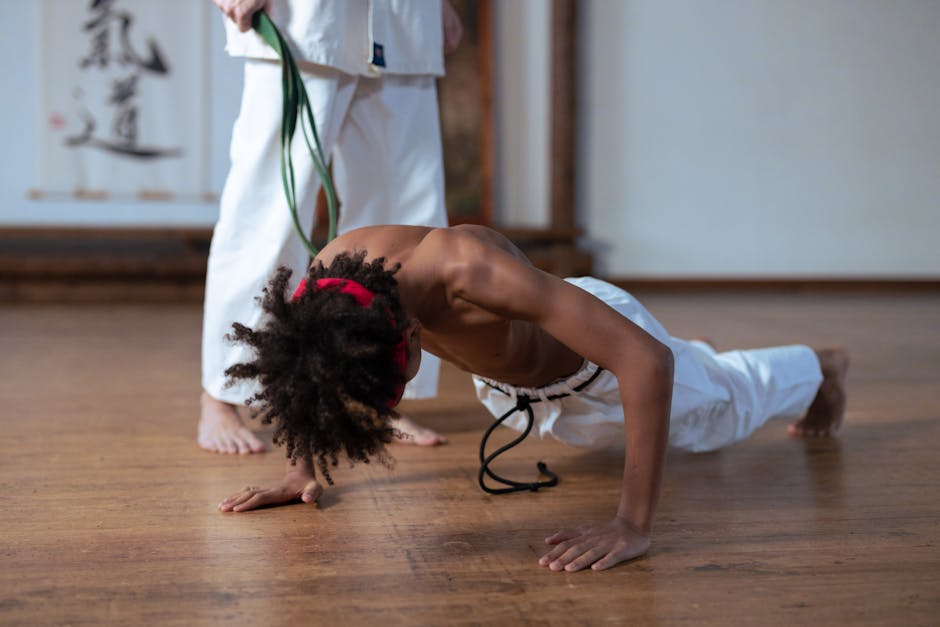
Warrior mindset physical conditioning prepares you to handle conflict at three levels simultaneously.
Internal conflict is the battle with yourself. Self-doubt. Fear. The urge to quit. Your training teaches you to recognize these voices, to name them, and to move forward anyway. Every rep you finish when your mind says stop is a victory over your own resistance.
External conflict is pressure from the world around you. Competition. Social expectation. Uncertainty about outcomes. Physical conditioning builds your confidence that you can handle what comes. You’ve already proven it in training.
Interpersonal conflict is the tension between you and other people. Family, peers, opponents. A warrior mindset keeps you composed, clear-headed, and functional when interpersonal pressure is high. Your training teaches you that discomfort is not danger. Conflict is not collapse.
When you work through all three layers in your conditioning, you develop a kind of resilience that shows up everywhere. You make better decisions under stress. You stay steady when others panic. You keep moving toward your goals even when obstacles appear.
The Mental Health Foundation You’re Building
Warrior mindset physical conditioning is a path to managing stress and building psychological resilience. Regular physical training that challenges you teaches your nervous system that you’re capable. It engages your body’s natural response systems.
The discipline itself matters. Showing up to train when you’re tired. Pushing through a difficult session. Finishing what you started. These aren’t just fitness gains. They’re evidence to your own brain that you follow through on commitments to yourself. That you’re reliable. That you can handle hard things.
This is the foundation of psychological resilience. And it compounds. The more you prove to yourself that you can do hard things, the more you believe it. The more you believe it, the more you’re willing to attempt. The more you attempt, the more competence you build. That cycle is the real warrior mindset.
Building Your Own Practice: Continuous Forward Movement
Start where you are. Your warrior mindset conditioning doesn’t need to be perfect. It needs to be consistent.
Establish a regular training schedule that combines strength work, endurance work, and skill development. Include at least one session per week where you deliberately practice maintaining composure under high intensity or fatigue. Train your breathing. Practice your technique when you’re already tired. Work on decision-making in challenging scenarios.
Track your progress, but not just in weights or times. Notice when your mind stayed steady in a difficult session. Note when you recovered quickly from discomfort. Observe when you handled interpersonal tension with more composure than you would have three months ago. These are the real metrics of a developing warrior mindset.
If you want structure grounded in real combat methodology and Bushido philosophy, systems like Fudoshin Kenpo Jujitsu provide a complete curriculum. This is warrior mindset physical conditioning integrated with practical technique, mental discipline, and a philosophical framework that makes the work meaningful.
The principle is always the same: continuous forward movement regardless of circumstances or obstacles. Some days your training will feel easy. Most days it won’t. Both days, you show up. Both days, you move. That’s where warrior mindset gets built.
Why This Matters Beyond the Gym

You’re not just building muscle or cardiovascular capacity. You’re training your nervous system to remain operational under stress. You’re teaching your brain that you’re capable. You’re developing the kind of character that doesn’t fracture when life gets hard.
This carries over everywhere. Into your work. Into your relationships. Into how you handle uncertainty and loss. Into how you lead and how you follow. A trained warrior mindset doesn’t make you aggressive or reckless. It makes you steady, clear, and reliable when pressure is high.
That’s worth the effort. And if you want a proven system to guide your work, explore what US Kenpo Jujitsu offers. Real-world combat methodology. Bushido discipline. Physical conditioning that builds both strength and character. This is warrior mindset training done right.
Related: Best Bushido Warrior Mindset Training 2026: Top 5 Ranked
Related: Physical Tolerance in Training: Build Lasting Strength
Related: Bushido Warrior Mindset for Self-Defense: Build Real Discipline
What’s the difference between warrior mindset and just being tough?
Toughness is often just discomfort tolerance. Warrior mindset is discomfort tolerance plus mental clarity plus emotional composure. A tough person can experience discomfort and keep moving. A warrior mindset practitioner can experience discomfort, think clearly, make good decisions, and keep moving. The clarity is what separates them.
How long does it take to develop a warrior mindset?
Changes in mental resilience can show up within a few weeks of consistent training. You may notice you handle stress differently. You may recover faster from setbacks. But true warrior mindset is something you build over time. It’s not a destination. It’s a direction you keep moving in.
Can warrior mindset physical conditioning support overall wellness?
Regular physical training that challenges you can support overall wellness and psychological resilience. The discipline, the evidence of your own capability, and the physical effects of exercise all contribute. If you’re dealing with serious mental health concerns, combine training with professional support from a qualified healthcare provider.
Do I need to be athletic or in shape to start warrior mindset conditioning?
No. You start exactly where you are. The warrior mindset part isn’t about your current fitness level. It’s about showing up, pushing your edge, and practicing staying composed when things get hard. Your body will adapt as you train consistently. Your mindset will develop if you’re consistent.
US Kenpo Jujitsu Quick Facts
- Founder: Brian K Allen
Martial Art and Self Preservation System Designed For Military, Law Enforcement, Corrections, and Reality Based Folks
Fudoshin Kenpo Jujitsu is a martial art and self-defense system that emphasizes a balance between stand-up fighting and ground fighting. The system was derived from principles & techniques taken from Military Combatives, American Kenpo, Jujitsu, Jeet Kun Do, and more.
It’s a system that focuses first on the primal instinctive reactions of human beings under duress, and is then followed by scientific principles of techniques.
Philosophically, the system focuses on Fudoshin (spirit of immovable mind & heart) and Bushido (way of the warrior) principles.