Integrated Striking and Grappling Defense: A Practical Guide

Integrated striking and grappling defense addresses handling threats at different distances. When someone attacks you, they may close the gap, clinch, and attempt to take you down. To develop effective defensive skills, you need competence both when there is distance and when an opponent is close.
Triangle of Victimization | Fudoshin Kenpo Jujitsu
The problem most people face is training in one range only. They learn to throw a good punch but may not have clinch experience. Or they spend years perfecting takedown defense but lack striking skills. Comprehensive self-defense training addresses multiple ranges.
Understanding how to transition smoothly between striking and grappling is what separates trained practitioners from those without structured training.
Related: Defensive Tactics Grappling for Officers: Essential Training Guide
Related: Best Punching Technique for Police Officers: Practical Training Guide
The Two Combat Ranges You Need to Master
Striking happens at distance. Your kicks, punches, elbows, and knees all work best when there’s space between you and your opponent. Distance provides time to see threats coming and room to generate power.
Grappling happens when that distance closes. Throws, joint locks, positional control, and clinching techniques take over. Once someone’s hands are on you, striking becomes less effective.
The real skill is managing the transition between these two ranges. You need to know when to step in and when to create space. You need techniques that work as distance shrinks and others that work when you’re locked up with an opponent.
Why Distance Management Is Everything
Distance management is about knowing where your opponent is relative to you at all times, and controlling that space to stay in your strongest position.
In striking range, you want maximum distance. If someone’s out there throwing, you have options. You can move offline, counter-strike, or step in with control. In grappling range, distance is gone and you need different tools. You need body positioning, leverage, and the ability to control their limbs.
The space between these two ranges is where most untrained people encounter difficulty. They’re close enough that a skilled grappler can shoot for a takedown, but far enough that strikes are still a factor. Managing this middle ground with intention is important.
When you step in to close distance, you do it with purpose. You’re not winging it. You’re controlling their body as you move, closing off their escape routes, and moving into your grappling range from a position of strength, not desperation.
Fundamental Techniques Come First
Here’s what trips up a lot of eager martial artists: they want advanced moves before they own the basics. That’s backwards.
Start with simple, proven techniques. A strong jab-cross combo. A basic front kick to create distance. A simple clinch entry. A basic throw from the clinch. A fundamental armlock or choke.
Master these first. Your nervous system needs repetition to make these automatic. You can’t think your way through a real conflict. Your body needs to know what to do before your brain even processes what’s happening.
Advanced techniques build on this foundation. Once you can handle the basics in live training, you can add layers. But if you skip this step, you may struggle when adrenaline spikes.
How to Train Striking and Grappling Together
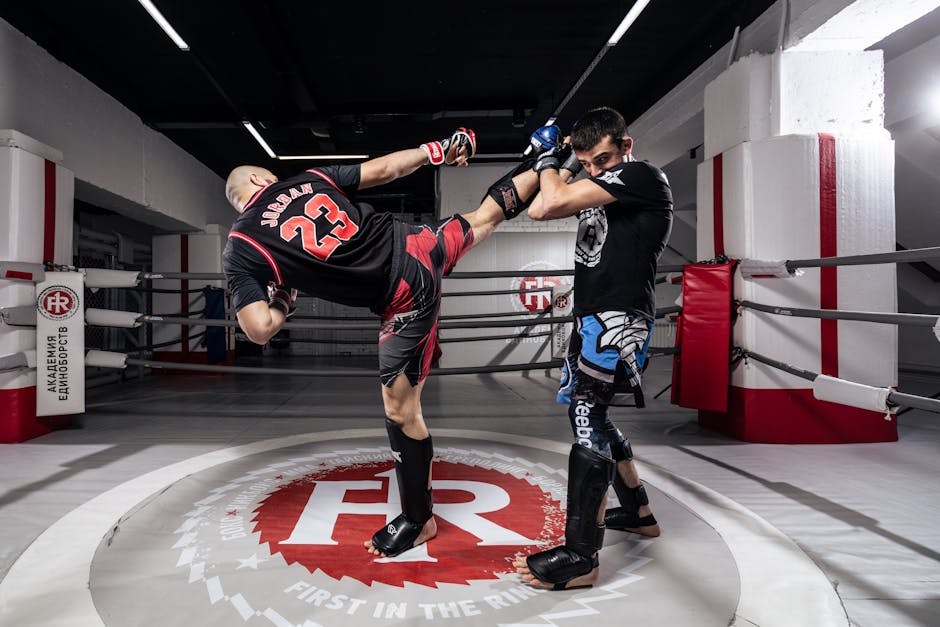
The most practical approach is live, progressive training. You start slow and controlled, then increase intensity and complexity as your skill grows.
Begin with drilling. Your partner holds a target pad and you practice strikes. You practice entries and throws without full resistance. This builds muscle memory. You learn the mechanics.
Next, add light resistance. Your partner starts defending passively. They’re not trying to stop you, but they’re not a dead target either. You feel what it’s like when someone moves and resists.
Then move to semi-live training. Now your partner is actively trying to defend and counter, but you’re still working at a moderate intensity. You’re testing your techniques against real resistance.
Finally, live training is where you put it all together. You and your partner train with agreed-upon safety rules. Taps mean submission. You stop head strikes if someone can’t recover. You train smart and hard.
The key is progression. Don’t jump to live training without building the foundation. You’ll either get hurt or develop bad habits.
Practical Grappling Applications for Real Defense
In actual self-defense, you rarely have time for complex exchanges. Most real grappling lasts seconds, not minutes.
Your goal is simple: control their body, neutralize the threat, and create an opportunity to escape or get help. Short grappling exchanges work for this. A clinch that leads to a throw. A quick takedown where you land in side control. An armlock after you’ve already got them down.
You’re not trying to win a grappling tournament. You’re trying to stop an aggressor and get to safety. That’s a completely different objective, and it changes which techniques matter most.
Learn throws that put someone on their back where you have the advantage. Learn positional control so once they’re down, they stay there. Learn one or two submissions you can hit if the opportunity presents itself. That’s enough.
Clinching: The Bridge Between Striking and Grappling
The clinch is where striking and grappling merge. It’s when you’re too close for effective punches and kicks, but you haven’t committed to a takedown yet.
A strong clinch gives you several advantages. You can prevent someone from creating distance to strike you. You can set up throws. You can control their posture and head position. You can create space to escape if needed.
Most people neglect clinch training. They do striking drills in their boxing stance, then they do grappling on the mat. But the clinch is where real fights live. Learning to move someone around, unbalance them, and transition from there is practical.
Related: How to Learn Military Fighting Techniques: A Practical Guide
A basic clinch is your arms around their neck and upper back, your head to the side of theirs for safety. From there, you can throw knees, set up a throw, or work toward a takedown. It’s a control position that sits right in the middle of your skill set.
Building a Training Program That Works

If you’re serious about integrated defense, structure matters. Random training may feel productive but can build gaps.
Dedicate specific days to different focuses. Monday might be striking combinations and footwork. Tuesday is clinch work and throws. Wednesday is positional grappling and submissions. Thursday you drill transitions between ranges. Friday is live, progressive sparring where you bring it all together.
This doesn’t mean you only do one thing each day. It means you emphasize one area as your main work, then complement it with other ranges.
Consistency matters. Three solid sessions a week over time builds skills. Your nervous system needs regular exposure to solidify skills.
If you’re looking for a structured system that combines military combatives with integrated striking and grappling principles, US Kenpo Jujitsu provides a curriculum built on this philosophy.

Mental Discipline in Integrated Combat
Your mind controls everything. Under stress, most people experience heightened reactions. Their vision narrows. Their hands shake. They may forget their training.
Mental discipline is the result of repeated exposure to controlled stress. You train regularly enough that when real pressure comes, it feels familiar.
This is where the philosophy behind real martial training matters. You’re not just learning techniques. You’re building a mindset that stays focused under pressure. You’re developing the discipline to execute a plan when adrenaline is present.
That’s why serious practitioners incorporate meditation, breathing exercises, and visualization into their training. These are core to making your physical skills reliable.
Start Where You Are
You don’t need years of experience to begin integrated striking and grappling training. You need a willingness to learn, consistent effort, and access to good instruction.
If you have no martial arts background, start with basics. Learn a proper stance. Learn to throw a straight punch and a basic kick. Learn to defend a clinch entry. Learn one throw. Build from there.
If you have striking experience but no grappling, add grappling slowly. Don’t test yourself against experienced grapplers on day one. Follow the progression: drilling, light resistance, semi-live, then live training.
The same applies if you come from a grappling background. Striking requires different timing and distance management. Respect that and progress methodically.
Whatever your starting point, the goal is the same: become competent in both ranges and smooth in the transitions between them. This is what comprehensive self-defense preparation looks like. This is what US Kenpo Jujitsu teaches its students through structured curriculum and practical methodology.
Common Questions About Integrated Defense
Is integrated striking and grappling harder to learn than just one discipline?
Learning one discipline deeply takes years. Learning two disciplines takes longer, but not twice as long. The fundamentals of both are learnable. What takes time is reaching mastery and making transitions automatic. For practical self-defense, you need competence in both ranges and the ability to bridge them. That’s reachable in dedicated training over time.
Can I learn integrated defense if I’m older or have limited athleticism?
Integrated training can be adapted for any fitness level. Striking doesn’t require explosive athleticism if you focus on timing and distance. Grappling emphasizes leverage and position. Controlled progression matters more than your age or athletic background. Many people start training at various ages and become capable.
How often do I need to train to develop competence in integrated defense?
Three times a week of focused training will build competence over time. Each session should be 60-90 minutes. More frequent training may accelerate progress, but consistency is important. If you can only train twice a week, that still works. If you can train five days a week, that’s also beneficial. The key is showing up regularly and progressing methodically.
What’s the biggest mistake beginners make in integrated training?
Trying to do everything at once. They want to learn 10 techniques instead of mastering 3. They try live training before they understand the basics. They neglect one range because they’re uncomfortable there. Smart training is progressive and focused. Master the fundamentals in each range first, then add complexity. This builds a solid foundation.
US Kenpo Jujitsu Quick Facts
- Founder: Brian K Allen
Martial Art and Self Preservation System Designed For Military, Law Enforcement, Corrections, and Reality Based Folks
Fudoshin Kenpo Jujitsu is a martial art and self-defense system that emphasizes a balance between stand-up fighting and ground fighting. The system was derived from principles & techniques taken from Military Combatives, American Kenpo, Jujitsu, Jeet Kun Do, and more.
It’s a system that focuses first on the primal instinctive reactions of human beings under duress, and is then followed by scientific principles of techniques.
Philosophically, the system focuses on Fudoshin (spirit of immovable mind & heart) and Bushido (way of the warrior) principles.