Physical Stability in Martial Arts: Build a Stronger Foundation

Physical stability is your ability to maintain control, balance, and power through your entire body during movement and combat. It’s what keeps you rooted when you throw a strike, grounded when someone tries to move you, and stable during dynamic activity. Without it, even perfect technique becomes less effective.
Triangle of Victimization | Fudoshin Kenpo Jujitsu
Think of stability as the invisible backbone of every martial arts move. You can learn every technique in a system, but if your body isn’t stable, your performance suffers. Your joints may feel less controlled under pressure. Your strikes may lack power. Your defenses may be compromised. That’s the reality most people discover when they step into a real confrontation.
Why Physical Stability Matters in Combat
Stability comes down to muscle strength around your joints, especially your core, ankles, knees, and shoulders. When these areas are weak, your body compensates with poor form.
Resistance training that builds muscle around joints is one of the most common approaches to improving biomechanics. In martial arts, this translates directly to performance. A stable fighter has better control and technique.
Consider what happens in a real self-defense scenario. You need to move explosively, change direction instantly, and maintain balance even when your opponent is trying to throw you or knock you down. Physical stability supports your ability to execute technique under dynamic conditions.
This is why serious practitioners study systems that emphasize foundational strength alongside technique. US Kenpo Jujitsu integrates stability training into every phase of development because combat effectiveness depends on physical foundation.
The Core Stability Building Block
Your core is your entire trunk, including your lower back, obliques, and deep stabilizer muscles. When your core is weak, overall stability is compromised.
Start with simple holds and isometric exercises. Planks are a foundational option. Hold for 30 seconds, rest, repeat for 5 rounds. As you progress, add movement. Bird dogs (opposite arm and leg extension) engage your core during movement.
Then progress to functional movements. Dead bugs, pallof presses, and anti-rotation exercises engage your core while resisting force from multiple angles.
Building Ankle and Foot Stability
Your feet are where stability begins. If your ankles lack strength, every strike you throw and every movement you make is affected. Your balance and footwork depend on ankle control.
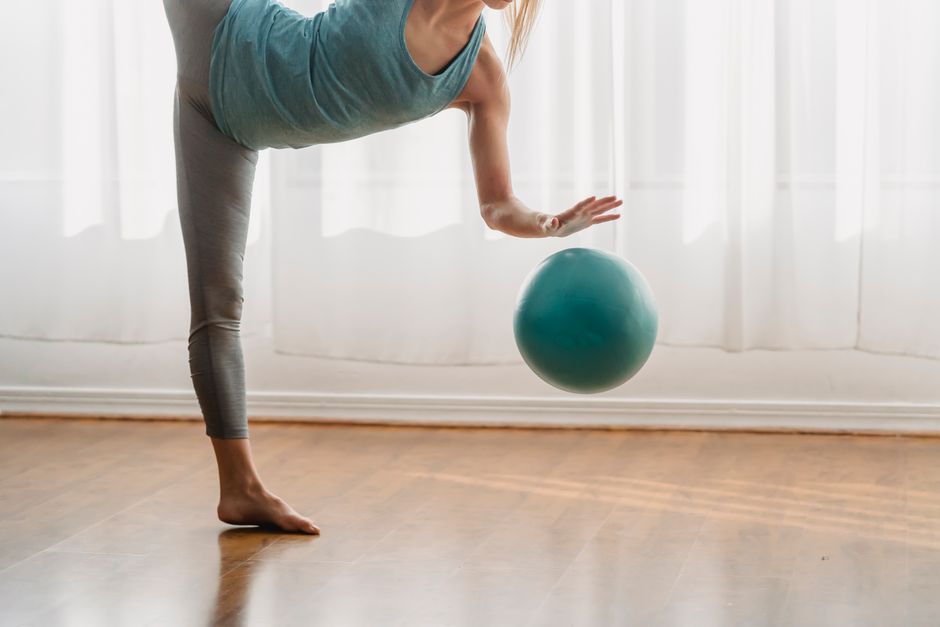
Single-leg balance work is your starting point. Stand on one leg for 30 seconds. Your stabilizer muscles activate to maintain balance. Do this on a hard floor first, then on a pillow or uneven surface to increase difficulty.
Progress to single-leg exercises with movement. Single-leg deadlifts engage your ankle and hip during movement. Lunges (forward, reverse, lateral) challenge your ankle stability under load.
Calf raises on one leg build ankle strength. If you can’t do a single-leg calf raise, your ankle strength is limited. That matters when you’re pivoting during a kick or pushing off during movement.
Knee and Hip Stability Through Resistance
Your knees and hips are where power and stability meet. Squats are a foundational movement. They build lower body strength and stability.
Related: Physical Qualities for Martial Arts: Build Strength & Power
Related: Strong Defense in Martial Arts: Build Unbreakable Protection
Related: Tenacious Defense in Martial Arts: Build Unbreakable Guard
Start bodyweight if you’re new to this. Go down slowly, pause at the bottom, push back up. Feel your quads and glutes engage. Do 3 sets of 12-15 reps, twice per week with rest days between.
Once you’re comfortable with bodyweight, add weight. Goblet squats (holding a weight at chest level) are an accessible progression that challenges your legs.
Romanian deadlifts build posterior chain strength (your hamstrings, glutes, and lower back). This supports your ability to execute throwing techniques and explosive movement.
Lateral lunges and side-lying leg raises address hip abductors, which engage your lower body during rotational movements and lateral shifts.
Shoulder Stability for Upper Body Control
Your shoulders are the most mobile joints in your body, which means they require dedicated stability work. In martial arts, shoulder stability supports your ability to execute throws, strikes, and grappling techniques with control.
Planks with shoulder taps challenge your core and shoulders simultaneously. From a plank position, tap your opposite shoulder. That’s one rep. Do 10-12 per side, controlled.
Push-ups are a foundational shoulder exercise when performed with proper form. Elbows stay tucked, body stays straight, full range of motion. If you can do 3 sets of 15+ push-ups with good form, your shoulder stability is developing well.
For serious practitioners, strength training resources specific to martial arts systems provide guided progressions that align stability work with combat technique.
Progressive Training for Long-Term Stability
Building physical stability is a long-term process. You build it over months and years. The key is consistency and slow progression.
Start light and manageable. If you can do 20 perfect bodyweight squats, do 20. Don’t force higher reps and compromise your form. Proper form creates proper movement patterns.
Every 2-3 weeks, increase one variable slightly. Add one more rep. Add a few pounds. Add a pause at the hardest part of the movement. Small increases compound into strength gains.
Track your progress. Write down what you did. How many reps, how much weight, how it felt. This creates accountability and shows you tangible progress over time.
Rest matters as much as work. Your muscles adapt during recovery, not during the workout. Sleep 7-9 hours. Eat adequate protein. Give yourself full rest days.
Integrating Stability Into Your Martial Arts Practice

Building physical stability supports your martial arts performance. When you practice kicks, your stable ankles and core support proper form and control. When you practice throws, your stable hips and shoulders support leverage and technique. When someone tries to take you down, your stable lower body supports your ability to defend.
Practitioners who combine dedicated strength training with technical instruction develop their skills more comprehensively. This is why US Kenpo Jujitsu emphasizes conditioning alongside technique. One without the other is incomplete.
Start adding stability work to your routine today. You don’t need a fancy gym. Bodyweight exercises, resistance bands, and consistent practice build physical stability over time.
Common Physical Stability Mistakes to Avoid
Don’t do stability work once a week and expect significant results. You need consistency. Aim for 3-4 sessions weekly, with proper rest days between.
Don’t rush progressions. If you can barely complete 10 reps with good form, you’re not ready for more weight. Proper form at lower intensity is more effective than poor form at high intensity.
Don’t ignore pain signals. Soreness is normal. Sharp pain is a warning signal. Listen to your body. A missed week of training is better than an injury that sidelines you for months.
Don’t skip the small stabilizer muscles. Everyone wants to do big lifts, but it’s the small muscles around your joints that support control. Band work, light isolation exercises, and bodyweight variations matter.
What’s an effective approach to improve physical stability?
Can I build physical stability with just bodyweight exercises?
Yes. Bodyweight work is an excellent foundation. Push-ups, squats, lunges, planks, and single-leg variations build stability. As you get stronger, add resistance bands or light weights to continue progressing.
How does physical stability support martial arts performance?
Strong, stable muscles around your joints support proper alignment during movement. This supports your ability to execute technique with control and precision. A stable joint supports better movement quality.
Should I do stability training on the same days as martial arts practice?
It depends on intensity. Light conditioning work can happen on training days. Heavy strength sessions work better on separate days so your body can fully recover and adapt. If you’re training martial arts 4 days per week, add 2-3 dedicated strength sessions with at least one full rest day.
US Kenpo Jujitsu Quick Facts
- Founder: Brian K Allen
Martial Art and Self Preservation System Designed For Military, Law Enforcement, Corrections, and Reality Based Folks
Fudoshin Kenpo Jujitsu is a martial art and self-defense system that emphasizes a balance between stand-up fighting and ground fighting. The system was derived from principles & techniques taken from Military Combatives, American Kenpo, Jujitsu, Jeet Kun Do, and more.
It’s a system that focuses first on the primal instinctive reactions of human beings under duress, and is then followed by scientific principles of techniques.
Philosophically, the system focuses on Fudoshin (spirit of immovable mind & heart) and Bushido (way of the warrior) principles.