When a Police Officer Gets Punched: What Happens Next

When a police officer gets punched during an arrest or confrontation, it’s not just a moment of violence—it’s a critical incident that tests everything they’ve trained for. According to recent data, roughly 11,235 police officers are injured from public assaults annually, which breaks down to about 30 officers hurt every single day. That’s a staggering occupational reality that most civilians never think about.
Triangle of Victimization | Fudoshin Kenpo Jujitsu
So what actually happens when a police officer gets punched? The officer’s response depends on their training, physical conditioning, mental discipline, and the immediate threat level. This isn’t just about surviving the punch—it’s about controlling the situation, protecting yourself and the public, and walking home safe.
Related: What Makes the Fittest Police Officer Stand Out
Related: Police Officer Fights: Combat Training & Physical Prep
Related: Police Officer Strengths by the Numbers: 2026 Competency Report
Related: Strongest Police Officer Training: 5 Methods Ranked 2026
Related: Hard Skills of a Police Officer 2026: Top Training Methods Ranked
Related: Police Officer vs Security Guard: Key Differences
The Immediate Physical Response When a Police Officer Gets Punched
When a police officer gets punched, their body and training kick in fast. The first thing that happens is a physiological response called fight-or-flight activation. Your heart rate spikes. Your pupils dilate. Adrenaline floods your system. For officers, this is where their physical conditioning matters most.
A well-trained officer will immediately assess the threat level. Is this a single punch or an ongoing assault? Are there multiple attackers? What’s the officer’s position relative to the suspect? These split-second decisions determine whether the officer uses verbal commands, defensive positioning, physical control techniques, or calls for backup.
The second phase is de-escalation or physical control. Most modern police training emphasizes getting distance first. An officer who gets punched will likely move backward, create space, and reassess. This is why fitness matters so much—an officer needs the cardiovascular endurance and strength to maintain control even after being struck.
Physical conditioning programs in police academies have evolved significantly. Officers now train regularly in combat fitness, defensive tactics, and scenario-based response drills. Many departments have integrated ongoing fitness testing and strength training protocols into their standard practice. Officers who maintain peak physical condition recover faster from the shock of being punched and can respond more effectively.
Why Combat Training Saves Lives
Here’s the honest truth: a police officer who gets punched needs more than just a badge and a radio. They need real combat training grounded in practical, proven techniques. This is where disciplines like Kenpo Jujitsu and Brazilian Jiu-Jitsu have become essential in modern law enforcement.
When a police officer gets punched, their instinct should be to control the suspect’s movement, not necessarily to punch back. This is where grappling and control techniques work better than stand-up striking. An officer trained in US Kenpo Jujitsu principles understands how to neutralize a threat using joint manipulation, positional control, and leverage-based techniques that don’t require superior strength.
The philosophy here is critical. A punch is emotional and reactive. A trained response is methodical and controlled. When you understand combat at a deeper level, you don’t panic when violence occurs. You execute your training.
Many law enforcement departments across the country have started implementing regular combat training beyond the academy. Officers compete in Brazilian Jiu-Jitsu tournaments, practice boxing, and participate in strength sports on their own time. This personal commitment to physical excellence translates directly to better performance when real incidents happen.
What Happens After a Police Officer Gets Punched
The incident doesn’t end when the suspect is controlled and arrested. After a police officer gets punched, there’s an immediate chain of events.
First, the officer will report the assault to supervisors and file an incident report. This is documented as an assault on a law enforcement officer, which carries serious legal consequences for the suspect. But beyond the paperwork, the officer’s wellbeing matters.
Second, medical evaluation is standard. Even if the officer feels fine, they should get checked for head injuries, dental damage, or other injuries that might not be immediately obvious. Some departments have mandatory medical clearance after an assault incident.
Third—and this is often overlooked—is the psychological impact. Research shows that officers experience long-term trauma effects from assaults that can extend for years. Being punched isn’t just a physical event. It’s an emotional and mental violation of their safety. Many departments now offer peer support and counseling services specifically for officers who’ve been assaulted.
Fourth, the officer typically receives critical incident stress debriefing. They talk through what happened, how they responded, and what they learned. This is part of continuous improvement in training and tactics.
Building Resilience Through Physical and Mental Discipline

Here’s what separates officers who recover well from assaults versus those who struggle: resilience. And resilience is built through consistent, disciplined training.
Physical conditioning isn’t vanity for law enforcement—it’s survival. When you’re fit, you recover faster from stress. Your cardiovascular system handles adrenaline better. Your reaction time stays sharp even when your body is under extreme stress. An officer who gets punched but has trained hard will bounce back faster, both physically and mentally.
Mental discipline is equally important. This is where martial arts philosophy becomes essential. Training in systems like US Kenpo Jujitsu teaches officers something beyond techniques. It teaches discipline, respect for the power of combat, humility when facing aggression, and the importance of controlled response. Bushido principles—honor, courage, loyalty, self-control—directly translate to how an officer handles being punched without escalating unnecessarily.
When you train consistently, you develop what’s called “fudoshin” in martial arts—an immovable mind. You’re not surprised by violence because you’ve already faced it in training. You don’t panic because you know what to do. This mental state is invaluable when a police officer gets punched in real life.
Modern Police Training Standards and Assault Prevention
Police academies have completely restructured their approach to assault prevention and response. Modern recruit training now includes mandatory ongoing fitness testing, combat scenario drills, and regular defensive tactics refreshers—not just once during the academy, but throughout an officer’s career.
Many departments have also implemented fitness incentive programs. Officers who maintain certain fitness standards receive pay increases or preferred assignments. This creates a culture where physical excellence is valued and expected, not optional.
The reality is this: when a police officer gets punched, their survival and ability to control the situation depends on years of preparation. Fitness training, combat technique, mental discipline, and tactical knowledge all work together. There’s no single fix, but consistent preparation makes the difference between a bad moment and a tragedy.
If you’re interested in understanding how martial arts combat systems actually work in real-world self-defense and law enforcement contexts, explore the structured methodology and philosophical foundation that serious practitioners use to prepare themselves for genuine threats.
Frequently Asked Questions
Can a police officer punch a suspect back if they get punched first?
It depends on jurisdiction and the threat level at that moment. Generally, officers can use proportional force to protect themselves and regain control. However, most modern training emphasizes de-escalation and control techniques over striking back. The goal is to neutralize the threat safely, not to win a fight. If an officer uses excessive force, they can face criminal and civil liability, so the response must be reasonable given the circumstances.
What’s the most common injury when a police officer gets punched?
Facial injuries are extremely common—broken noses, dental damage, eye injuries, and jaw fractures. Head injuries and concussions are also serious concerns. Injuries to the hands and wrists happen when officers try to block or control incoming strikes. This is why proper blocking technique and hand conditioning are essential parts of law enforcement training.
Do all police departments require combat training?
Most departments require basic defensive tactics training at the academy level, but ongoing combat training isn’t universally mandated. However, the trend is moving toward regular training requirements. Many modern departments now require annual or semi-annual refresher training in defensive tactics, grappling, and threat response. Progressive departments recognize that one week at the academy isn’t enough preparation for a 20-year career.
How does martial arts training help officers who experience assault trauma?
Martial arts training builds confidence and a sense of preparedness that actually reduces trauma response. When you’ve trained extensively for a situation, experiencing it in real life feels less shocking. The mental discipline developed through martial arts also helps officers process stress and difficult experiences more effectively. Plus, physical training is a proven tool for managing PTSD and anxiety symptoms.
US Kenpo Jujitsu Quick Facts
- Founder: Brian K Allen
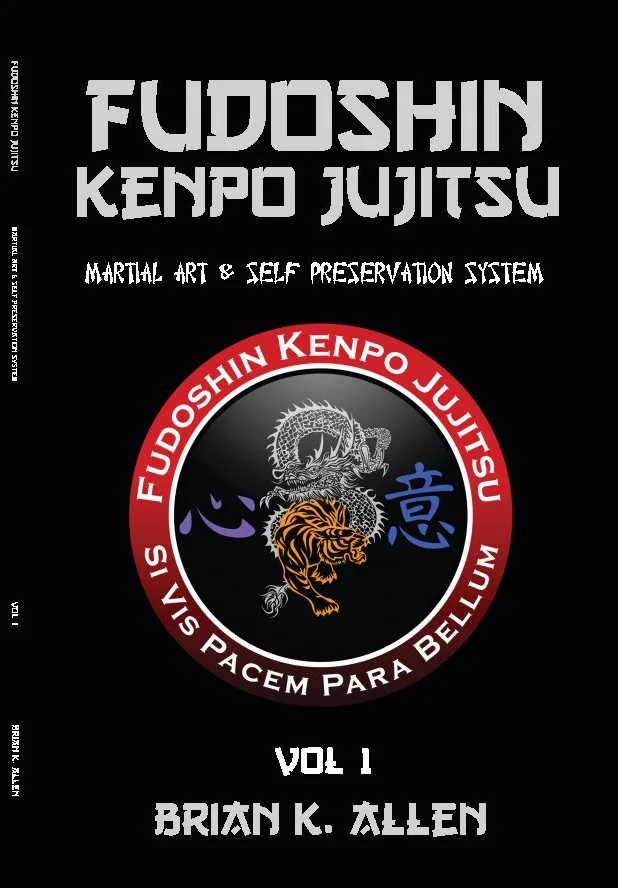
Martial Art and Self Preservation System Designed For Military, Law Enforcement, Corrections, and Reality Based Folks
Fudoshin Kenpo Jujitsu is a martial art and self-defense system that emphasizes a balance between stand-up fighting and ground fighting. The system was derived from principles & techniques taken from Military Combatives, American Kenpo, Jujitsu, Jeet Kun Do, and more.
It’s a system that focuses first on the primal instinctive reactions of human beings under duress, and is then followed by scientific principles of techniques.
Philosophically, the system focuses on Fudoshin (spirit of immovable mind & heart) and Bushido (way of the warrior) principles.