Kenpo Jujitsu Self Defense Techniques: Practical Methods
Kenpo jujitsu self defense techniques emphasize speed, precision, and positioning over raw power. Whether you’re facing a grab, a punch, or multiple attackers, the core methods taught in this system provide practical options to escape and control the situation.
Where’s Their Weapon | Where’s Their Friend
The foundation of kenpo jujitsu is learning to recognize danger early, respond decisively, and use leverage instead of strength. This approach combines techniques that work across different scenarios and ranges.
Related: Best Kenpo Jujitsu Audio Courses 2026: Top 5 Ranked
Understanding Vital Point Targeting in Kenpo Jujitsu Self Defense
Vital point targeting is a core component of kenpo jujitsu self defense. The system focuses on striking or applying pressure to specific anatomical areas with precision.
The eyes, throat, and groin are primary target areas in kenpo jujitsu. These areas are emphasized in the system because of their anatomical significance. What kenpo jujitsu teaches you is timing, distance, and follow-through.
In a self defense situation, the goal is to create an opening to escape. Once you have space, you move away and get to safety.
Rapid Hand Strikes as Your First Line of Defense
Speed is emphasized in kenpo jujitsu. Hand strikes are prioritized because your hands are faster than your legs and closer to your opponent when threats happen. Most attacks start at close range, where kicks are less practical but hand strikes are immediate.
Basic rapid strikes include jabs, palm strikes, and ridge-hand strikes. A jab drives your front hand straight to create distance. A palm strike uses your open hand to target the nose or chin. A ridge-hand strike uses the inner edge of your hand to target the neck or temple.
What makes these effective in kenpo jujitsu is the speed and accuracy. You’re firing multiple strikes from your current position, forcing your opponent to react to you instead of executing their attack plan.
Practice these strikes against a pad or heavy bag. Your nervous system needs to know the path of each strike so that under stress, your body responds automatically without conscious thought. Structured kenpo jujitsu training materials break down strike mechanics so you understand not just what to do, but why each angle and distance matters.
Arm Blocks and Defensive Positioning
Blocking in kenpo jujitsu is about redirecting energy and controlling your opponent’s limb so they can’t attack again immediately.
Kenpo jujitsu teaches specific arm block positions designed to work against both punches and kicks. A high block protects your head. A middle block covers your ribs and torso. A low block protects your groin and legs.
The key is proper arm positioning. When you block, your forearm should be close to your body, not extended far away. This gives you leverage and makes it harder for an attacker to break through your defense. Your elbow stays bent, and you use the meat of your forearm, not your thin wrists.
After blocking, you’re in position to counter-attack. That’s the real power of defensive positioning. You’re not just stopping the threat, you’re setting yourself up to strike or control your opponent’s limb.
Against kicks, arm blocks work because you’re meeting the kick with your forearm perpendicular to the incoming leg. This spreads the impact across a larger surface area and disrupts the attacker’s balance.
Catching and Controlling Incoming Attacks
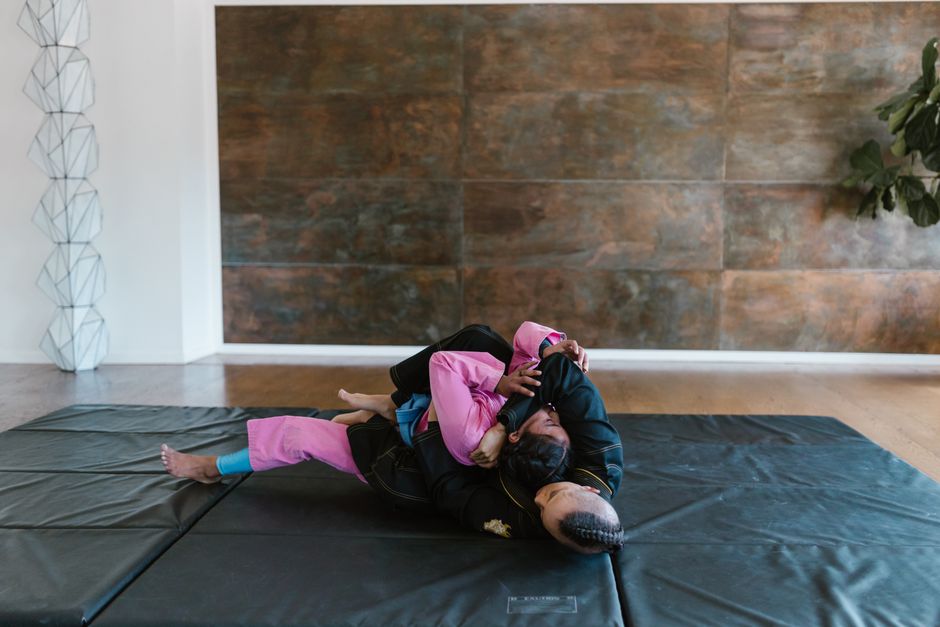
Once you understand blocking, the next step is catching. Instead of just deflecting an attack, you grab the limb and control it.
When someone throws a punch or kick, their limb has momentum and extension. If you catch that limb during its travel, you can control where it goes next. This is where kenpo jujitsu’s blend of multiple disciplines applies.
A catch against a kick works like this: as the kick comes toward you, you move your arm to intercept the leg and grab it. Once you have the leg, your opponent loses their balance and stability. They’re now hopping on one leg and can’t generate new attacks effectively. From this position, you can pull them off balance, step in to strike, or transition to control techniques.
Against hand strikes, catching is similar. You move to intercept the incoming hand, secure the wrist or forearm, and control the limb. This is where leverage matters more than strength. A proper grip combined with correct arm positioning lets a smaller person control a larger opponent.
Close-Range Control and Ground Defense Techniques
Self defense doesn’t always stay standing. You need to know how to function if you end up on the ground or in close quarters where striking isn’t possible.
Kenpo jujitsu incorporates leverage-based control methods drawn from jujitsu principles. These techniques emphasize positioning over strength. When you’re close to your opponent, the goal is to control their limbs and maintain a position where you can escape or apply additional techniques.
Close-range control includes clinch positions where you control your opponent’s arms and head. From a clinch, you can strike the body and face, transition to throws, or move to the ground if necessary. The key is keeping your opponent’s hands managed so they can’t attack you effectively.
Ground defense teaches you how to escape if you end up on your back or underneath your opponent. Most self defense situations don’t end in positional grappling exchanges. You want to get off the ground and create distance so you can move away. Kenpo jujitsu ground techniques focus on escaping to your feet rather than competing for submissions.
If someone takes you down, you learn to protect your head and torso, move your hips to create space, and post on your hands to drive yourself back to standing. These are fundamental movements that let you get up and away from danger.
Flow-Based Transitions and Practical Scenarios
The techniques are useful only if they connect smoothly in real situations. Flow-based training shows you how a block transitions into a strike, which transitions into a control, which transitions into an escape.
When you train flow, you practice moving from one technique to the next without stopping. Your opponent throws a punch, you block, you immediately counter-strike, they react, and you flow into the next appropriate technique based on what they do.
This kind of practice builds your timing and teaches your nervous system the rhythm of combat. You’re not memorizing a single technique in isolation. You’re learning how self defense situations develop and how to respond fluidly as circumstances change.
Practical scenario training involves realistic situations: a stranger grabs your arm, someone approaches aggressively, multiple people are involved. You practice your techniques against resistance so you understand what works and what breaks down under pressure.
This is where the multi-discipline approach matters. US Kenpo Jujitsu combines boxing footwork and hand speed, judo positioning and throws, jujitsu control methods, Muay Thai clinch work, and eskrima stick and hand concepts. You’re not limited to a single toolbox. You have options that work at different ranges and against different types of attacks.

The Philosophy Behind Effective Self Defense
Technical skill is half the foundation. The other half is mindset and character.
Self defense training based on Bushido principles teaches you discipline, respect, and the responsibility that comes with knowing how to apply these techniques. You train to protect yourself and others, not to seek conflict. A practitioner with strong character doesn’t need to prove anything by fighting.
This philosophy changes how you approach training. You’re not training to win a tournament or look tough. You’re training to develop the awareness, skills, and character to handle real danger calmly and effectively.
Your mindset before, during, and after a threat influences your response. Consistent practice builds composure under pressure. You train your body and your mind together.
Before stepping into formal self defense training, understand what you’re really pursuing. US Kenpo Jujitsu teaches kenpo jujitsu self defense techniques as part of a larger martial arts system rooted in military combatives and Bushido wisdom. The techniques matter, but the character you build matters more.
Related: Military Combatives Self Defense Techniques: A Real-World Guide
Starting Your Kenpo Jujitsu Self Defense Training
You don’t need years of background to begin learning these techniques. Self defense training starts immediately with fundamental strikes, blocks, and positioning.
Start with vital point awareness. Understand where the target areas are on the human body and why they’re emphasized in the system. Practice simple jabs and palm strikes until they feel natural. Learn basic blocks and how to position your arms correctly. These foundations are everything.
Then layer in catching and control. Once you can block, add the element of grabbing and managing the limb. Flow one technique into another. Introduce resistance through partner practice.
Finally, practice your skills against realistic scenarios. A partner grabs your wrist. Someone pushes you. Multiple people approach. Your techniques need to work under pressure, not just in perfect practice conditions.
Consistent practice is the only way to develop real skill. A person who trains twice a week for a year builds more capability than someone who trains hard for a month then stops. You’re rewiring your nervous system to respond correctly under stress. That takes time and repetition.
Books, videos, and audio materials provide structure and detailed instruction, but they work best alongside consistent physical practice. If you’re looking to build a foundation in self defense skills grounded in real-world application, comprehensive kenpo jujitsu training resources give you the framework to understand both the how and the why behind each technique.
Related: Kenpo Jujitsu Self Defense Training: Real-World Combat Skills
What’s the difference between kenpo and jujitsu?
Kenpo emphasizes rapid hand and foot strikes combined with blocks and positioning. Jujitsu emphasizes leverage-based control, throws, and ground techniques. Kenpo jujitsu systems blend both approaches. You get the speed and striking focus of kenpo combined with the control and positioning methods of jujitsu, giving you options at multiple ranges and scenarios.
Can I learn self defense techniques from videos alone?
Videos teach you what techniques look like and how they work mechanically. But self defense requires physical practice with resistance. You need a partner to understand timing, pressure, and how your body actually responds when someone resists. Videos are valuable for structure and detail, but they work best alongside hands-on practice.
How long does it take to develop self defense capability?
Basics take weeks to months of consistent training. Developing reliable skill takes longer. You’re training your nervous system to respond automatically, and that takes repetition. Most people see noticeable improvement in awareness and technique execution within three to six months of regular practice.
Do I need to be strong or athletic to use kenpo jujitsu techniques?
Kenpo jujitsu is built on leverage and precision, not power. Proper technique lets a smaller, weaker person control someone larger and stronger. Conditioning helps, but correct positioning and timing matter more than raw strength or athleticism.
US Kenpo Jujitsu Quick Facts
- Founder: Brian K Allen
Martial Art and Self Preservation System Designed For Military, Law Enforcement, Corrections, and Reality Based Folks
Fudoshin Kenpo Jujitsu is a martial art and self-defense system that emphasizes a balance between stand-up fighting and ground fighting. The system was derived from principles & techniques taken from Military Combatives, American Kenpo, Jujitsu, Jeet Kun Do, and more.
It’s a system that focuses first on the primal instinctive reactions of human beings under duress, and is then followed by scientific principles of techniques.
Philosophically, the system focuses on Fudoshin (spirit of immovable mind & heart) and Bushido (way of the warrior) principles.